
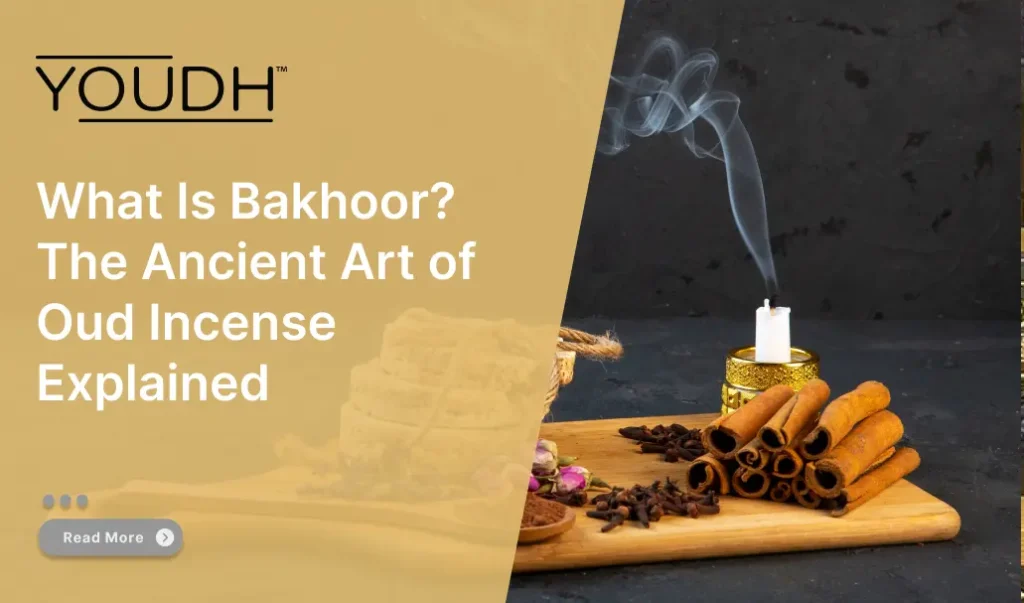
Walk into a home in the Gulf an hour before guests arrive, and you will almost always smell bakhoor on the air. Bakhoor is the warm, smoky, slightly sweet scent that has welcomed visitors across Saudi Arabia, the UAE, Kuwait, Oman, Qatar, and Bahrain for centuries. Bakhoor is more than incense. Bakhoor is hospitality, ceremony, and an everyday ritual that has travelled, in recent years, from the Gulf to homes across the UK.
This guide explains exactly what bakhoor is, how bakhoor is made, the cultural role bakhoor plays in Middle Eastern homes, the difference between bakhoor and ordinary incense, and how to use bakhoor properly in a UK home. If you have ever wondered what bakhoor smells like, where bakhoor comes from, or how to start using bakhoor yourself, everything you need is here.
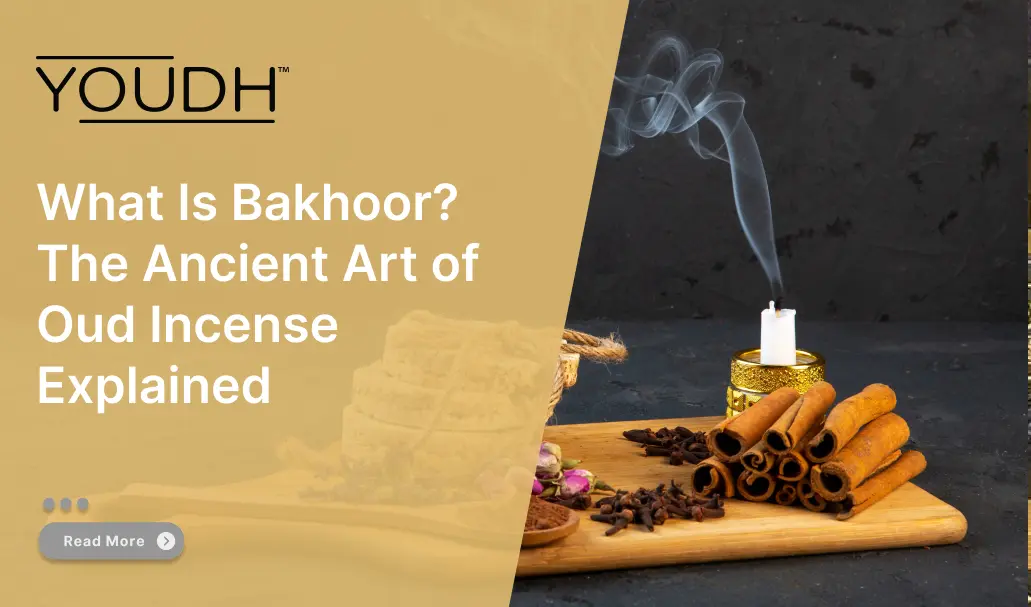
Bakhoor is scented wood chips, paste, or briquettes burned slowly over hot charcoal to release a fragrant smoke. The base of bakhoor is usually agarwood, the same resinous heartwood that produces oud oil, soaked in a blend of aromatic oils, resins, and natural ingredients. When the bakhoor touches heat, the oils evaporate and the wood releases a deep, warm scent that fills a room and clings to fabric, hair, and skin.
The word bakhoor comes from the Arabic بخور, meaning fumes or smoke. Bakhoor has been used across the Arabian Peninsula for over a thousand years and remains one of the most loved home fragrances in the Gulf. Bakhoor is burned to welcome guests, to scent clothing before special occasions, to mark Eid and Friday prayers, and simply to perfume the home after cleaning.
Unlike a candle or a reed diffuser, bakhoor releases its scent only when burned. A small piece, no bigger than a thumbnail, can perfume an entire room for thirty minutes or more, and the scent of bakhoor can linger in fabric and hair for days afterwards.
Real bakhoor is a craft product. Good bakhoor is made by soaking wood, usually agarwood chips or fragrant base wood, in a carefully blended mixture of natural oils and resins, then drying the result into small chips or briquettes ready to burn.
The typical ingredients in quality bakhoor include:
Cheap bakhoor often replaces real agarwood with sawdust soaked in synthetic fragrance oils. This kind of bakhoor still burns and still produces smoke, but the scent is thinner, sharper, and disappears quickly. Real bakhoor is denser, slower-burning, and leaves a far deeper trace in the room.
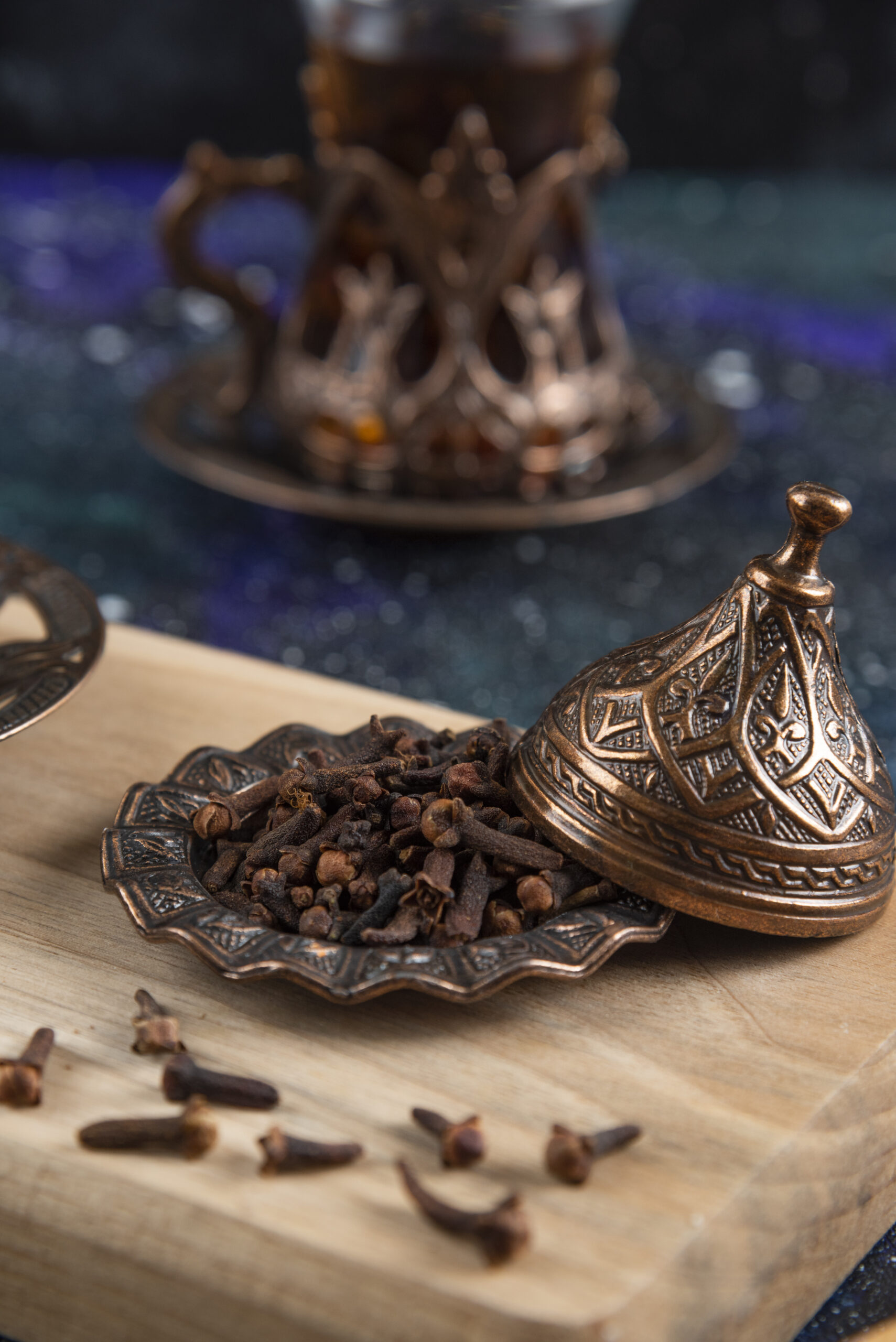
Traditional bakhoor is made in small batches by perfumers across the Gulf, India, and Yemen. The process is unhurried and largely unchanged from how bakhoor was produced hundreds of years ago.
First, the base wood is selected. Premium bakhoor uses real agarwood chips. Mid-range bakhoor uses a base of less aromatic wood like sidr or even oudh dust, designed to carry the oils rather than scent the room itself. The wood is broken into small chips.
Second, the wood is soaked in the bakhoor blend. The mixture of oud oil, sandalwood oil, floral oils, resins, and musk is combined according to the perfumer’s recipe. The wood chips soak in this blend for days, sometimes weeks, absorbing the oils deep into the fibres.
Third, the bakhoor is dried. Once the chips have absorbed enough oil, they are dried slowly. The result is a slightly tacky, intensely scented wood chip that is ready to burn. Some bakhoor is shaped into pressed briquettes for easier handling.
Fourth, the bakhoor is aged. Like oud oil, good bakhoor benefits from time. The oils settle into the wood, the scent rounds out, and the burn becomes smoother. The best bakhoor is aged for several months before it is sold.
The scent of bakhoor depends on the blend, but every quality bakhoor shares a few core qualities. Bakhoor is warm, slightly sweet, resinous, and undeniably smoky. The smoke is soft and curling rather than sharp. The sweetness sits at the back, never up front. And the wood beneath everything gives bakhoor its grounding, almost meditative quality.
Different bakhoor styles lean in different directions. A rose-heavy bakhoor smells floral, soft, and warm, perfect for daytime use. An oud-heavy bakhoor is darker, smokier, and more powerful, often reserved for evenings and special occasions. A saffron bakhoor leans bright and honeyed. A musk bakhoor is animalic and clinging, ideal for scenting clothes before going out.
Most importantly, bakhoor is not a perfume you smell only when you walk past someone. Bakhoor fills a space. The smoke wraps around fabric, hair, and skin, and the scent of bakhoor lingers for hours, sometimes days. This is why bakhoor is the chosen scent for welcoming guests, for weddings, and for marking moments that matter.
In the Gulf, burning bakhoor is part of everyday life, not a special-occasion activity. Bakhoor is burned at specific moments, each with its own meaning.
Before a guest arrives, the host burns bakhoor and walks the mabkhara, the traditional incense burner, through the home. By the time the guest is seated, the entire space carries the scent of bakhoor. The guest is then offered the burner so the bakhoor smoke can perfume their clothes and hair. This is one of the oldest hospitality customs in the Arab world.
Bakhoor is burned before Friday prayers and during Eid celebrations, following the long tradition of using fragrance for important occasions. The scent of bakhoor marks the moment as something more than ordinary.
Bakhoor is burned at weddings, henna ceremonies, and engagement parties. The bride is often perfumed with bakhoor smoke as part of the ceremony, and guests pass the burner among themselves to share the scent.
Many families burn bakhoor every morning or evening, simply to scent the home. The bakhoor smoke neutralises cooking smells, refreshes the space, and creates a calming atmosphere. In the UK, this is one of the most appealing uses of bakhoor for new buyers: a natural, traditional alternative to plug-in air fresheners.
Bakhoor and regular incense look similar from the outside, but they are different products with different histories.
Regular incense usually comes in stick or cone form. A stick or cone is lit, the flame is blown out, and the smouldering tip releases smoke. Stick incense is most associated with South Asian and East Asian traditions and tends to be lighter, more linear in scent, and faster-burning.
Bakhoor is different. Bakhoor is not self-igniting. A piece of bakhoor is placed on top of glowing charcoal in a mabkhara burner, where the heat releases the oils slowly. The burn is gentler, the smoke is denser, and the scent is deeper. Bakhoor is closer in feel to burning real agarwood chips than to lighting an incense stick.
The base materials matter too. Regular incense often uses bamboo cores, synthetic binders, and fragrance oils. Quality bakhoor is built on agarwood or other natural base woods soaked in real essential oils, resins, and often pure oud. The Aquilaria tree, which produces agarwood, is listed under CITES Appendix II, the international agreement controlling trade in vulnerable species, which gives some sense of how strictly real bakhoor ingredients are regulated.
Using bakhoor properly is simple once you know the steps. You need three things: a charcoal burner (mabkhara) or electric bakhoor burner, charcoal discs (for traditional use), and your bakhoor chips.
Light a charcoal disc using long-handled tongs and a flame. Hold the disc until it begins to spark, then place it inside the mabkhara. Wait a minute until the charcoal is glowing red and covered in fine grey ash. Place one or two pieces of bakhoor on top of the charcoal. The bakhoor will start to release fragrant smoke within seconds.
Carry the bakhoor burner through the rooms you want to scent. Pause briefly in each space to let the smoke settle. To perfume clothing, hold the garment above the burner and let the bakhoor smoke rise through the fabric. To scent your hair, lean your head over the burner and let the bakhoor smoke pass through. Do not place fabric or hair directly on the burner.
Modern electric bakhoor burners use a heated plate to warm the bakhoor without an open flame. Plug the burner in, place a small piece of bakhoor on the plate, and the heat slowly releases the oils. This method is cleaner, safer for children and pets, and ideal for UK flats and homes where open flames are inconvenient. The scent is slightly softer than with charcoal but more controllable.
Less bakhoor is more. Start with a single small chip, about the size of a fingernail. This is usually enough to perfume a room for thirty minutes to an hour. The bakhoor smoke continues to scent the space long after the chip has stopped smoking, and the scent lingers in fabric for hours afterwards. If the bakhoor is too strong, use less. If you want a longer burn, add a second chip after the first has finished.
Burn bakhoor in a well-ventilated room. Open a window slightly to let the smoke move. Keep the burner away from curtains, paper, and anything flammable. Never leave a lit bakhoor burner unattended. If anyone in your home has asthma or sensitive lungs, start with very small amounts and increase only if comfortable.
Not all bakhoor is created equal. A few signs help you spot quality bakhoor.
At YOUDH, we are best known for our natural oud oils, but the same commitment to real, natural, ethically sourced ingredients applies to everything we offer. Bakhoor sits naturally alongside oud oil as part of the same tradition: the same agarwood, the same patient craft, the same warm Middle Eastern hospitality that has carried oud across centuries.
If you have been using YOUDH oud oil and want to bring the same scent into your home, bakhoor is the obvious next step. A small piece of quality bakhoor before guests arrive transforms the whole space. Add a few minutes of bakhoor on a Friday evening and the home holds the scent through the weekend. Burn bakhoor before Eid or Ramadan, and you carry forward a tradition that goes back further than most of modern perfumery.
Explore the YOUDH bakhoor and oud range to bring the warm, smoky, hospitable scent of the Gulf into your UK home. For more on the source material, read our companion guide on oud oil. Free UK delivery on orders over £50.