A bottle of real oud oil can cost more per gram than gold, and one drop on the wrist can last a full day. Yet most people who buy oud oil for the first time have no idea what they are smelling, where it comes from, or how to use it properly. This guide fixes that with oud oil explained. By the end, you will know exactly what oud oil is, how oud oil is made, the difference between pure oud oil and synthetic alternatives, and the right way to apply oud oil so it lasts and smells the way it should.
Oud oil is one of the oldest fragrance materials in continuous use, with a heritage stretching back over a thousand years across the Arabian Peninsula, South Asia, and Southeast Asia. Modern UK customers are discovering oud oil for a simple reason: it is natural, alcohol-free, lasts longer than spray perfume, and smells like nothing else.
What Is Oud Oil?
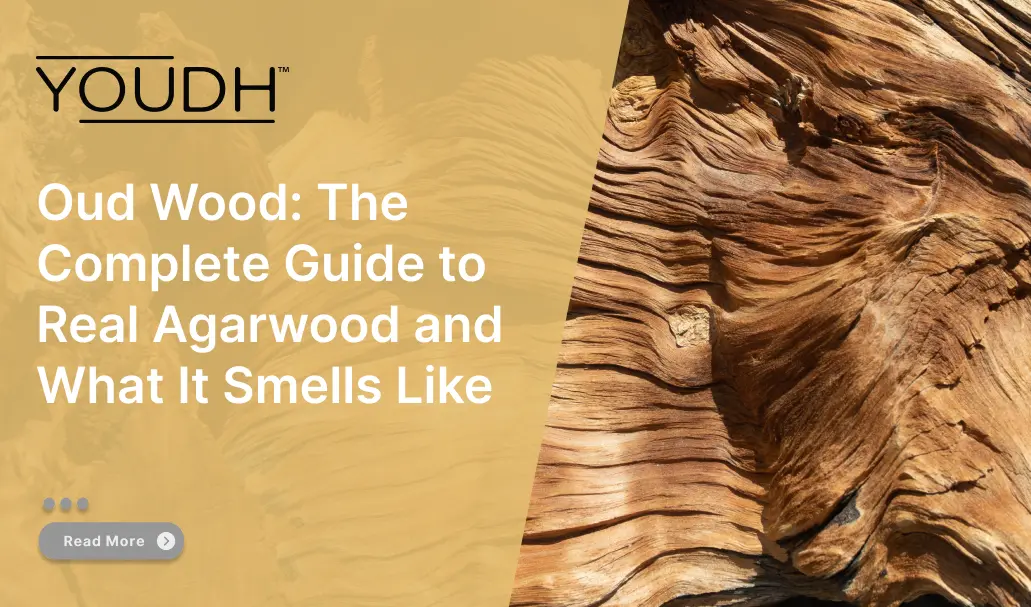
Oud oil is a natural perfume oil distilled from agarwood, the dark resinous heartwood produced inside the Aquilaria tree. When the Aquilaria tree becomes infected by a specific mould, it produces a dark, aromatic resin as a defence mechanism. The resin-rich wood is called agarwood, and the oil extracted from it is what we know as oud oil.
Pure oud oil is one of the most concentrated and complex fragrance materials in the world. A single drop contains hundreds of aromatic compounds, which is why oud oil smells different on every person and evolves over the course of a day. The oil is dark, viscous, and intensely fragrant. It needs no alcohol carrier, no synthetic fixatives, and no additives to wear beautifully.
The Aquilaria tree is the only known source of natural oud oil. Three main species are used in production: Aquilaria malaccensis, Aquilaria crassna, and Aquilaria sinensis. All three are listed under CITES Appendix II, the international agreement that controls trade in vulnerable species, which is one reason genuine oud oil is so rare. You can read more about the species and their status through the Royal Botanic Gardens, Kew.
How Oud Oil Is Made: From Tree to Bottle
Understanding how oud oil is made explains both the price and the depth of the scent. The process is slow, biological, and almost impossible to rush.
Step 1: The Aquilaria tree must be infected
Healthy Aquilaria wood is pale and unscented. Oud oil only becomes possible when the tree is wounded and a specific mould enters the wood. In response, the tree produces a dark, fragrant resin to seal and protect the wound. This resinous heartwood is agarwood, and it can take ten to thirty years to form naturally. Fewer than two in every hundred wild Aquilaria trees develop usable agarwood without intervention, which is why oud oil is so scarce.
Step 2: The agarwood is harvested and aged
Once an Aquilaria tree contains enough resin-rich heartwood, it is harvested. Skilled cutters separate the dark, fragrant agarwood from the pale outer wood by hand. The higher the resin content, the more valuable the wood, and the more oud oil it will yield. Premium agarwood is often aged for months or years before distillation to deepen the eventual scent.
Step 3: The wood is soaked and distilled
Agarwood is broken down into chips or powder and soaked in water for days, sometimes weeks, to release the resin. The soaked wood is then steam-distilled in traditional copper stills. The process is slow. A typical distillation runs for several days, and the yield of oud oil is tiny. Hundreds of kilograms of agarwood can produce only a few millilitres of pure oud oil.
Step 4: The oil is aged
Fresh oud oil straight from the still can smell rough, smoky, or animalic. Like a fine wine or whisky, oud oil improves with age. Most quality oud oil is aged from several months up to several years before it is bottled. Aging softens the rougher facets of the oil and lets the deeper warm, woody, balsamic notes come forward.
Purity Grades: How to Tell Real Oud Oil from Imitation
The oud oil market is full of products that contain very little real oud. Knowing what to look for protects both your nose and your wallet.
Pure oud oil
Pure oud oil is 100% distilled oud, with no carrier oil, no alcohol, and no synthetic additives. It is dark, viscous, and intensely fragrant. A single drop is enough for an entire day. Pure oud oil is the most expensive form, and the only form that delivers the full evolving scent of natural oud.
Blended oud oil
Blended oud oil pairs natural oud oil with other natural ingredients like rose, vanilla, sandalwood, or citrus oils. A good blend keeps the oud scent at the centre while making it more wearable for everyday life. This is the format most UK customers prefer, because it captures the depth of natural oud oil in a more approachable form. YOUDH Light and YOUDH Night both sit in this category.
Synthetic oud
Most products labelled as oud in the high-street perfume aisle contain no real oud oil at all. They use synthetic oud accords, lab-made molecules that imitate the warm, woody facets of oud but flatten everything else. Synthetic oud is linear, sits on top of the skin, and does not evolve. It is also far cheaper to produce, which is why it is so common.
Diluted oud oil
Some sellers stretch a small amount of real oud oil with neutral carrier oils to bring the price down. There is nothing wrong with this in principle, but it should be declared. If a product is sold as pure oud oil but the price is unusually low, it is almost certainly diluted.
Oud Oil Explained: A Practical Guide
Oud oil is wonderfully forgiving once you understand how it works. The most common mistake new wearers make is treating oud oil like a spray perfume and using too much. A single drop is enough. These are the techniques that get the most out of every bottle.
Where to apply oud oil
- Pulse points. Wrists, the base of the throat, behind the ears, and the inside of the elbows. These warmer areas help the oil release its scent slowly throughout the day.
- Behind the ears. A small dab here projects the scent every time you turn your head.
- On the back of the hand. A practical option for shorter wear, since the area cools faster than pulse points.
- On clothing or beard hair. Oud oil clings beautifully to fibres and facial hair, where it can last for days. Test a hidden patch of fabric first.
How much oud oil to use
Start with one drop. Roll, dab, or touch the oil onto your skin and let it absorb naturally. Do not rub the wrists together. Rubbing breaks the oil’s molecular structure and shortens its life on your skin. A single bottle of YOUDH oud oil, used daily, typically lasts around three months because so little is needed.
When to apply oud oil
Apply oud oil after a shower, while your skin is still slightly warm and freshly moisturised. Hydrated skin holds fragrance for longer, which is why oud oil lasts noticeably better on people who moisturise. Avoid applying directly to sun-exposed skin in very hot weather, as heat can shift the scent profile temporarily.
How to layer oud oil
Oud oil pairs beautifully with rose, vanilla, sandalwood, and amber. If you are layering, apply the lighter scent first and let it absorb before adding oud oil. The oud oil acts as the base note and will dominate. Avoid layering oud oil over alcohol-based sprays, which can clash with the natural oil and shorten its longevity.
Why Choose Natural Oud Oil over Synthetic Alternatives
There are three practical reasons UK customers are moving away from alcohol-based spray perfumes towards natural oud oil.
First, longevity. Natural oud oil lasts a full day from a single drop. Most alcohol-based sprays start to fade within three to four hours, which is why people end up reapplying through the day.
Second, skin compatibility. Synthetic fragrances are a leading cause of contact dermatitis and allergic reactions. Natural oud oil contains no alcohol, no phthalates, and no synthetic musks. YOUDH is non-alcoholic and hypoallergenic, which is why many of our customers with sensitive skin or fragrance allergies have switched to oud oil after years of reactions to spray perfumes.
Third, scent quality. Real oud oil evolves on the skin in a way no synthetic fragrance can replicate. The complexity of the oil, the slow opening, and the way the scent becomes personal to the wearer are all signatures of natural oud oil that cannot be mimicked in a lab.
Choosing the Right Oud Oil for You
The right oud oil depends on what you want from your fragrance. If you are new to oud, start with a lighter, blended oud oil with rose, vanilla, or citrus. The oud scent will be present without overwhelming, and your nose will get used to the depth of real oud oil gradually.
If you already love deep, smoky, woody fragrance, go straight to a darker oud blend or pure oud oil. The full traditional oud experience is intense, grounding, and unmistakable.
YOUDH Light is the lighter, brighter side of oud oil. It pairs natural oud with citrus, vanilla, and floral notes, and is the easier introduction for most UK newcomers. YOUDH Night is the deeper, woodier oud oil expression, with more smoke, musk, and resin. Both are 100% natural, non-alcoholic, hypoallergenic, and crafted in the UK from ethically sourced agarwood.
Start with a Single Drop
Oud oil is the most natural way to wear fragrance, and the most personal. One drop in the morning gives you the full day, without alcohol, without synthetic additives, and without the irritation that comes with most modern perfumes. If you have been frustrated by sprays that fade by lunchtime or trigger reactions, oud oil is the obvious next step.
Explore the full YOUDH oud oil range and find the scent profile that suits you. For more on the sensory experience, read our companion guide on what oud actually smells like. Free UK delivery on orders over £50.