
You light your first oud incense cone, expect a deep warm scent to fill the room, and instead get a sharp synthetic smoke that fades in ten minutes. The problem is not your technique. Most so-called oud incense sold in the UK contains no real oud. The label says oud, the packaging looks the part, but the cone itself is sawdust soaked in synthetic fragrance oil, with no agarwood anywhere in the formula.
This guide fixes that. By the end, you will know exactly what oud incense is, what real oud incense smells like, how to light and use it properly in a UK home, the difference between it and bakhoor, and how to spot the genuine article from the imitations that fill most UK shelves.
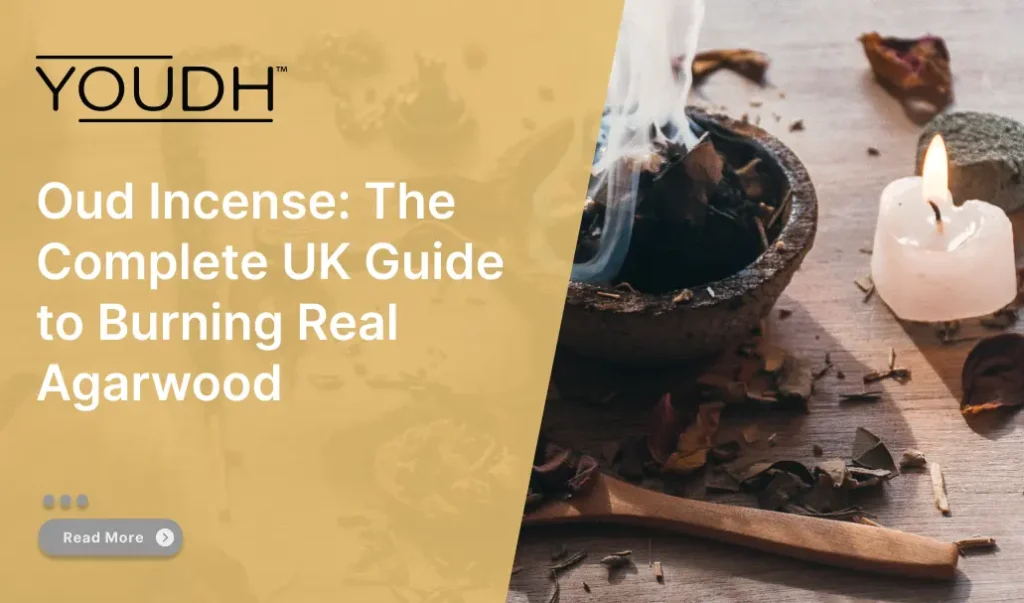
Oud incense is incense made from agarwood, the dark, resinous heartwood of the Aquilaria tree. The wood is ground, blended with natural binders and aromatic oils, and pressed into self-burning cones, sticks, or coils. Light the tip, blow out the flame, and the cone smoulders on its own for twenty to thirty minutes, releasing a warm, woody, smoky scent that lingers in fabric and air for hours after the burn ends.
It is one form within a wider oud category. The raw aromatic material is oud itself, the resin-saturated heartwood produced inside the Aquilaria tree when the tree is wounded and infected by a specific mould. From that raw material come several formats: oud oil for personal wear, raw oud chips burned over charcoal, bakhoor blends prepared for traditional Gulf-style burning, and incense in self-burning cone or stick form.
The defining feature of this format is that it lights and burns on its own. Unlike bakhoor or raw oud chips, the cone or stick does not need a separate heat source. This makes oud incense the most accessible entry point into the world of oud home fragrance, and the easiest format for a UK household new to the category.
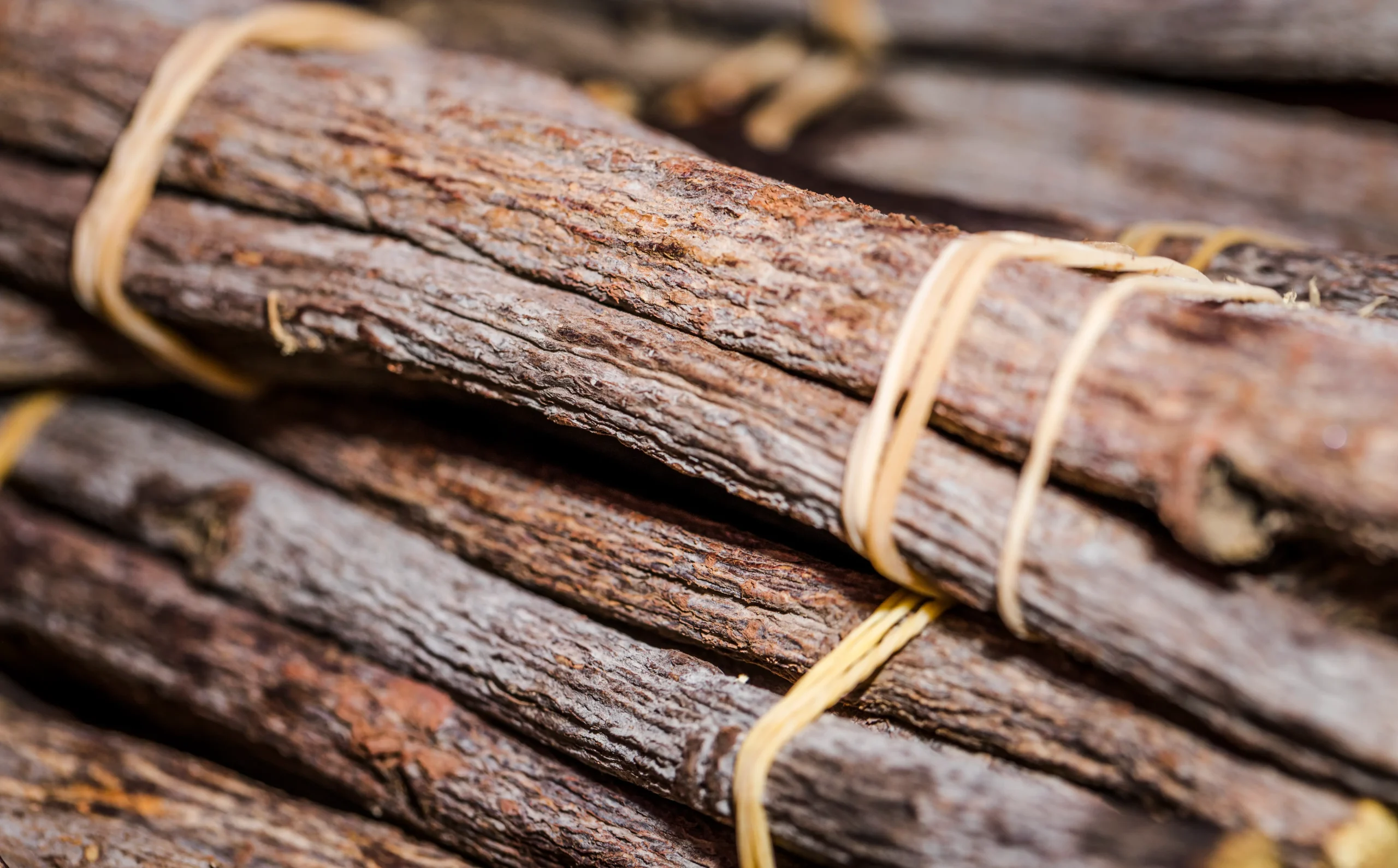
Real oud incense traces back to the Aquilaria tree. The three commercially significant species used in oud production are Aquilaria malaccensis, Aquilaria crassna, and Aquilaria sinensis, native to South and Southeast Asia. The tree grows tall and unremarkable in its healthy state, with pale, unscented wood. The fragrant resin that becomes oud only forms when the tree is wounded and infected by a specific mould, often Phaeoacremonium. The tree responds to the infection by producing a thick, dark, aromatic resin to seal off the damaged tissue.
Over years, sometimes decades, that resin saturates the heartwood, transforming the pale wood into dark, dense, intensely fragrant agarwood. Industry estimates suggest fewer than two in every hundred wild Aquilaria trees produce usable agarwood. The rest stay unscented for their entire lives. This biological rarity is why real product cannot be produced cheaply, and why most cones sold under £5 a pack contain little or no real agarwood at all.
Real agarwood is internationally protected. All Aquilaria species are listed under CITES Appendix II, the international agreement controlling trade in vulnerable species. Legitimate brands use agarwood from cultivated plantations with proper permits and traceability, not wild-harvested material from protected populations. When you buy real oud incense, you are buying material with paperwork, regulatory oversight, and a supply chain that takes years to operate. That depth of process is what separates the genuine article from the synthetic imitation that dominates the UK market.
Real oud incense smells warm, woody, smoky, and slightly sweet, with a resinous depth and a soft animalic warmth underneath. The opening is often more intense than the heart of the burn, which surprises new wearers. The first thirty seconds can read as sharply smoky or slightly sweet, and the deeper warmth comes through as the cone settles. This is the natural behaviour of real oud and a useful first test of authenticity.
The exact scent profile depends on the origin of the agarwood used. Indian-sourced cones are darker and more animalic. Cambodian-sourced cones are sweeter, with honeyed and balsamic notes. Vietnamese versions are smokier and more incense-like in the ceremonial sense. Most product sold in the UK uses Cambodian or blended sources, because the sweeter profile is more approachable to first-time burners.
Underneath the regional differences, every real example shares the same backbone: woody, resinous, balsamic, and slightly smoky. For a deeper look at how oud develops and what each regional variety smells like, read our companion guide on what oud smells like.
Using oud cones correctly takes thirty seconds to learn and changes how the scent develops in your home. The basic technique is simple. The details matter more than most guides admit.
Hold the cone by the wide base, with the pointed tip up. Light the tip with a match or lighter. Let the flame catch for five to ten seconds, until the tip glows red. Gently blow out the flame. The tip should now smoulder rather than burn, releasing a thin stream of aromatic smoke. Place the cone upright on a heat-safe holder, ideally one designed for cones with a small dish to catch falling ash. A standard ceramic dish works in a pinch.
Hold the stick by the bare end. Light the coated tip and let the flame burn for ten seconds, until the tip is fully alight. Blow out the flame. The stick should now smoulder steadily, releasing smoke from the lit end. Place the stick into a holder designed for incense sticks, with the lit tip pointing up and the bare end secured in the base. Standard wooden incense holders work well and catch ash cleanly.
A standard cone burns for twenty to thirty minutes. A stick burns for thirty to sixty minutes depending on length. The scent in the room continues for several hours after the burn ends, and the smell on fabric can last days. Burn incense in a well-ventilated room with a window slightly open. Position your incense holder away from curtains, paper, and anything flammable. Never leave a lit cone or stick unattended.
If your smoke alarm sits directly above the area where you burn incense, move the holder a metre or two further away. UK smoke alarms can trigger from incense smoke at close range. For flats and smaller homes, an electric incense burner is the cleaner alternative, gently warming the cone or chip without an open flame.
Oud incense and bakhoor are often used interchangeably, but they are not the same product. Both are oud-based home fragrance, but the format and the burning method are what separate them.
Oud incense is self-burning. The cone or stick lights on its own, smoulders to completion, and needs no external heat source beyond the initial flame to light the tip. The format is convenient, accessible, and well-suited to UK homes where setting up charcoal feels impractical.
Bakhoor is different. It is a blend of agarwood chips, resins, sandalwood, and oils, shaped into chips or briquettes that need to be placed on a separate heat source: either burning charcoal in a traditional mabkhara, or an electric bakhoor burner with a heated plate. Without the heat source, bakhoor does not release its scent at all.
In practical terms, cones are the easier daily option. Bakhoor delivers more intensity and the full traditional experience, which is why bakhoor remains the standard for special occasions and formal hospitality across the Gulf. Many households use both: cones for everyday burning and bakhoor for Friday evenings, Eid, weddings, and when guests are coming.
If you are new to the category, oud incense is the simpler starting point. If you already love oud and want to go deeper, bakhoor is the natural next step. Read our companion guide on what is bakhoor for the full picture.
Most oud incense in the UK market is synthetic. The cone burns, produces some smoke, smells vaguely warm, and contains no actual agarwood. Spotting the real thing before you buy saves you both money and the disappointment of an unscented burn. These are the practical tests.

Oud incense is alcohol-free by definition. The cone or stick contains agarwood, natural binders, and aromatic oils, with no alcohol involved at any stage of production or burning. This matters more than most UK guides explain.
For wearers and households who follow Islamic rulings on alcohol in fragrance, oud incense fits naturally with the Quran and Sunnah. Oud has been used by Muslims for over a thousand years, with the Prophet Muhammad (peace be upon him) reported in authentic hadith to have used oud. Burning incense before Friday prayers, on Eid, and at Ramadan gatherings carries forward a practice that runs through Islamic tradition. The smoke perfumes clothing and the home in a way that lasts through prayer, family meals, and the long hospitality of religious occasions.
Across the Gulf, incense burning and bakhoor are central to welcoming guests. The burner is brought out before visitors arrive, the smoke fills the room, and guests sometimes pass the burner under their clothing as a gesture of hospitality. For British households of Middle Eastern, South Asian, or African heritage, lighting incense at home is one of the most direct ways to maintain that tradition in a UK context.
YOUDH is a UK-based natural oud brand, focused on bringing real, ethically sourced agarwood to British households. Our oud is 100% natural, alcohol-free, hypoallergenic, and free from phthalates and hormone-disrupting chemicals. Every product is built around real oud, not synthetic accord, which means the scent develops properly and lasts the way real oud is meant to last.
Explore the YOUDH range to find natural oud crafted with respect for the tradition behind it. For the personal wear side of oud, read our complete guide to oud oil, or for the home fragrance side, our companion guide on bakhoor. Free UK delivery on orders over £40.
Rose oud perfume is the pairing of two of perfumery’s most powerful natural materials: the deep, resinous warmth of oud and the fresh, layered sweetness of rose. It is one of the oldest and…
You spray a designer oud, catch a rich opening, and by lunchtime it has all but vanished. That fade is not bad luck. It is chemistry. Most oud you buy on the high street is an oud perfume: a small…
What Is Attar? The Complete Guide to Traditional Perfume Oil Attar is one of the oldest continuously used perfume traditions in the world. For over a thousand years, attar has been the foundation of…
Walk into any traditional perfume shop in the Gulf and you will find rows of small bottles labelled mukhallat. The word covers a category of fragrance that has shaped Arab perfumery for centuries,…
You light your first oud incense cone, expect a deep warm scent to fill the room, and instead get a sharp synthetic smoke that fades in ten minutes. The problem is not your technique. Most so-called…
Oud wood is the rarest fragrant wood in the world. A single kilogram can cost more than gold. Agarwood has been burned in homes across the Middle East, India, and Southeast Asia for over a thousand…
Can females wear oud? The short answer is yes, absolutely, and they have been doing so for over a thousand years. Can females wear oud the same way men do? Yes, with the same application techniques…
The best oud perfume for women has nothing to do with whether oud is masculine or feminine. Oud has been worn by women across the Middle East, South Asia, and North Africa for over a thousand years,…
Oud is the most powerful fragrance in a man’s collection, and the most easily wasted. Apply oud for men the wrong way and you get a fragrance that fades by lunch, projects too loudly, or never…