
The first time most people smell real oud, they pause. The oud smell is unlike anything else in modern perfumery. It is deep, warm, slightly smoky, and quietly animalic, with a sweetness that arrives only after a few minutes on the skin. If you have ever wondered “what does oud smell like?”, the honest answer is that oud is a living scent. It changes as it warms on you, which is exactly why oud fragrance has captivated wearers across the Middle East, South Asia, and now the UK for centuries.
This guide walks you through the full sensory picture of oud: the core oud smell, the way an oud scent shifts across hours, how it compares to sandalwood, musk, and amber, and what to expect the first time you try a natural oud oil. By the end, you will know exactly what oud smells like, and which oud scent profile suits you.
Oud comes from agarwood, the dark, resin-soaked heartwood produced inside the Aquilaria tree when it becomes infected by a specific mould. That resin is the source of the oud smell, and its complexity is the reason oud fragrance behaves like no other note. A natural oud scent is built on four overlapping layers.
Woody is the foundation. Think of the dry, dense smell of polished old wood, closer to aged teak or rosewood than fresh pine. The oud smell is grounded in this woodiness from the first moment.
Balsamic is the resinous, slightly sweet warmth that sits underneath the wood. This is what makes oud fragrance feel rich rather than dry. It is the same family of smells you get from labdanum, benzoin, and aged amber.
Smoky is the third layer. A good oud oil carries a soft incense-like smokiness, never harsh. It reminds many people of the smell of a recently extinguished candle, or wood smoke drifting from a distance. This is part of what gives oud fragrance its meditative, grounding quality.
Animalic is the most divisive layer of the oud smell, and the one that surprises newcomers. Real oud carries a leathery, slightly funky warmth that signals you are smelling something alive and natural. In Indian oud especially, this animalic side is pronounced. In Cambodian and Vietnamese oud, it is softer and sweeter.
Oud fragrance does not announce itself the way a synthetic spray does. A natural oud oil opens slowly, and the oud smell you notice in the first thirty seconds is rarely the scent you will be wearing an hour later.
In the opening minute, expect the sharper, smokier facets of the oud smell to land first. Some people describe this as barnyard-like, smoky, or medicinal. This is normal. It is the resin announcing itself, and it settles within minutes.
Between fifteen and forty-five minutes, the oud scent rounds out. The smoke calms, the wood deepens, and a soft sweetness emerges. This is where oud fragrance becomes recognisable as the warm, expensive-smelling scent most people associate with luxury perfumery.
From the first hour onwards, you are in the heart of the oud smell. The scent moves close to your skin, becomes quieter and more personal, and develops a creamy, leathery warmth. This is what wearers mean when they say a real oud fragrance smells different on every person. The oud scent reacts to your skin chemistry, your body temperature, and even the weather.
Picture the oud smell as a wheel with four quadrants, each pulling the scent in a different direction. Most natural oud oils sit at some point on this wheel rather than at the centre.
Indian oud often leans this way: dense, polished wood with an animalic edge. The oud scent here is grounding and traditional, the kind worn for prayer and special occasions across the Gulf.
Cambodian oud is the classic example. The oud smell is honeyed, with notes of dried fruit and warm resin. This is the most beginner-friendly oud scent profile.
Vietnamese and some Thai oud sits here. The oud fragrance has a clean, almost ceremonial smokiness, like high-quality incense burned at a respectful distance.
Malaysian and Bornean oud often shows a fresh, almost mossy quality on top of the deeper oud smell. This is the most unusual oud scent and the hardest to find in finished perfumes.
If you have never tried oud, comparing it to scents you already know makes the oud smell easier to picture.
Oud versus sandalwood: sandalwood is creamy, smooth, and milky. The oud smell is denser, smokier, and more complex. Sandalwood whispers; oud holds a room. Both are woody, but oud carries a resinous and animalic depth that sandalwood does not.
Oud versus musk: musk is soft, skin-like, and quiet. The oud scent is louder, more textured, and far more layered. Where musk smells like warm skin, oud smells like warm wood, warm resin, and warm skin all at once.
Oud versus amber: amber and oud share a balsamic warmth, but amber is sweeter, rounder, and brighter. The oud smell is darker and woodier. Many of the most loved fragrances pair them together, because amber softens the smokier edges of oud fragrance beautifully.
Oud versus patchouli: patchouli is earthy, damp, and slightly mineral. Oud is dry, smoky, and resinous. They share a depth but read very differently on the skin.
Most fragrances labelled “oud” on the high street use synthetic oud accords. These imitate the warm, woody facets of the oud smell, but flatten everything else. The smoke is muted, the animalic side is removed, and the slow unfolding is replaced with a single linear scent.
Natural oud oil behaves differently because it is genuinely natural. The Aquilaria tree itself is listed under CITES Appendix II, the international agreement that regulates trade in endangered species, which gives some sense of how rare the source material is. When you smell a real oud fragrance, you are smelling something that took years to form inside the tree and hours to distil. That depth cannot be faked.
This is also why an oud scent from a natural oud oil smells more personal. The oud smell becomes part of your skin rather than sitting on top of it, which is why people often say they catch their own oud fragrance on their clothes the next day.
If you are buying oud fragrance for the first time, these are the signs of a real oud scent worth trusting.
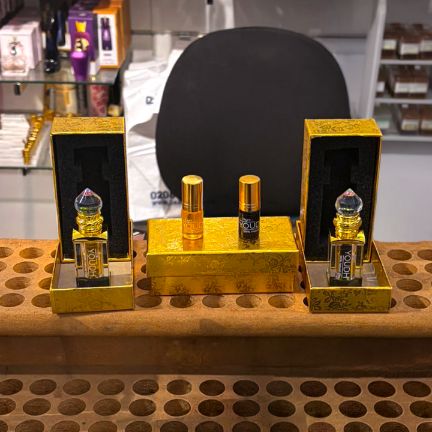
At YOUDH, we work with two clear oud scent expressions for everyday wear in the UK. They are designed so you can choose which side of the oud smell suits you, rather than committing to one classical profile.
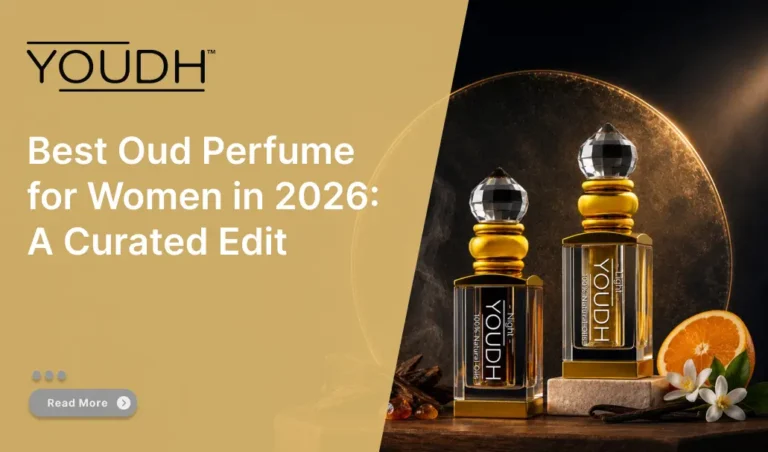
YOUDH Light is the softer, brighter side of oud fragrance. It pairs natural oud oil with citrus, vanilla, and floral notes, so the oud smell is warm but lifted. This is the easier oud scent for newcomers, and the one many UK customers reach for during the day, in the office, or in warmer months.
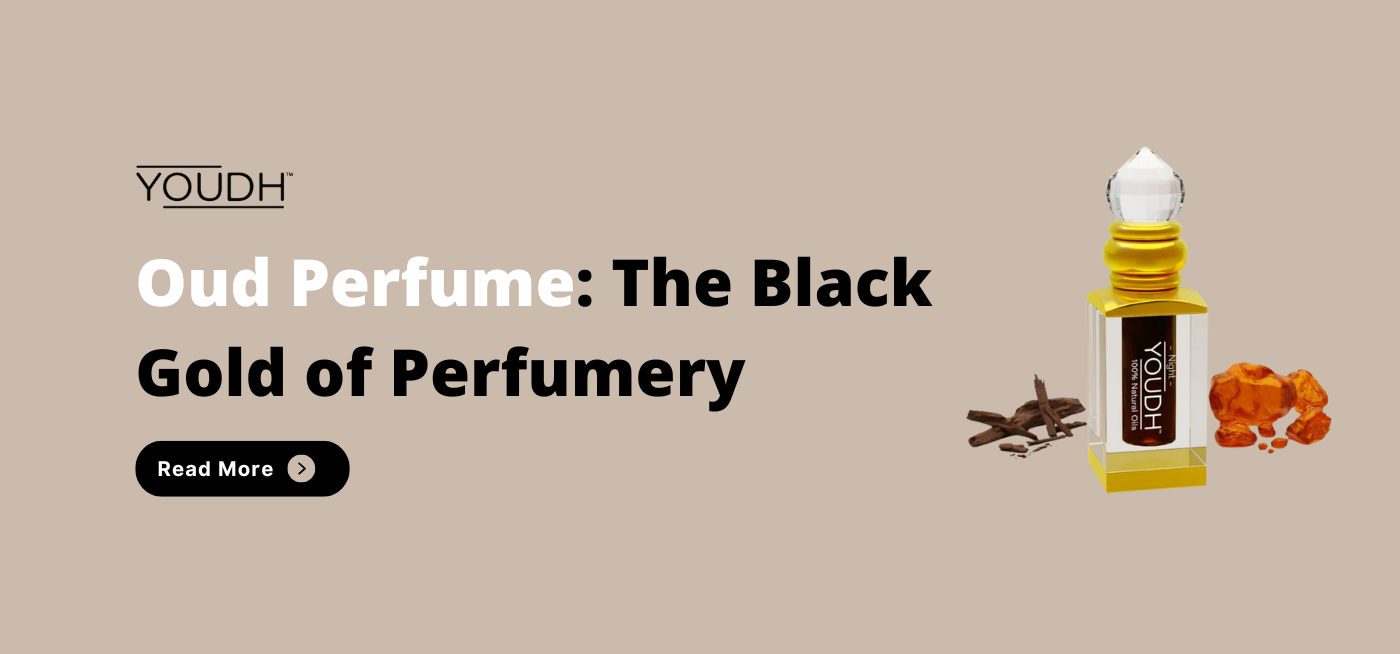
YOUDH Night is the deeper, woodier expression of oud. The oud smell here leans into smoke, musk, and resin, with a slow, sophisticated trail. This is the oud fragrance for evenings, colder months, and the wearer who wants the full traditional depth of natural oud.
Both are non-alcoholic and oil based, which means the oud scent stays close to the skin and lasts the full day from a single drop. This is the format oud has been worn in across the Middle East and South Asia for centuries, and it remains the most honest way to experience what oud smells like.
Reading about an oud scent only goes so far. The oud smell is something you have to experience on your own skin, because the way oud fragrance evolves on you is part of the scent itself.
If you are new to oud, start with YOUDH Light. The softer floral and citrus pairing makes the oud smell more approachable while keeping the depth of real oud oil. If you already know you love warm, smoky, woody fragrance, go straight to YOUDH Night. Both come in a 3ml roller that lasts daily wearers around three months from a single bottle, because a real oud scent only needs a drop.
Explore the YOUDH oud fragrance range to find the oud smell that suits you, or read more about what oud oil is and how it is made. Free UK delivery on orders over £50.
Rose oud perfume is the pairing of two of perfumery’s most powerful natural materials: the deep, resinous warmth of oud and the fresh, layered sweetness of rose. It is one of the oldest and…
You spray a designer oud, catch a rich opening, and by lunchtime it has all but vanished. That fade is not bad luck. It is chemistry. Most oud you buy on the high street is an oud perfume: a small…
What Is Attar? The Complete Guide to Traditional Perfume Oil Attar is one of the oldest continuously used perfume traditions in the world. For over a thousand years, attar has been the foundation of…
Walk into any traditional perfume shop in the Gulf and you will find rows of small bottles labelled mukhallat. The word covers a category of fragrance that has shaped Arab perfumery for centuries,…
You light your first oud incense cone, expect a deep warm scent to fill the room, and instead get a sharp synthetic smoke that fades in ten minutes. The problem is not your technique. Most so-called…
Oud wood is the rarest fragrant wood in the world. A single kilogram can cost more than gold. Agarwood has been burned in homes across the Middle East, India, and Southeast Asia for over a thousand…
Can females wear oud? The short answer is yes, absolutely, and they have been doing so for over a thousand years. Can females wear oud the same way men do? Yes, with the same application techniques…
The best oud perfume for women has nothing to do with whether oud is masculine or feminine. Oud has been worn by women across the Middle East, South Asia, and North Africa for over a thousand years,…
Oud is the most powerful fragrance in a man’s collection, and the most easily wasted. Apply oud for men the wrong way and you get a fragrance that fades by lunch, projects too loudly, or never…