Free Shipping on all orders over £50!

Free Shipping on all orders over £50

Why Is Oud So Expensive? The Real Reason Behind the Price

Why Is Oud So Expensive

Most people who buy oud feel cheated by the time they finish the bottle. They pay £150 for a designer “oud” perfume, wear it once, and notice it smells nothing like the real oud their uncle wears, or the incense burned in a relative’s house, or anything they remember from travelling in the Middle East. Then they read that real oud costs more than gold and assume the high price is the reason their bottle smells thin. They’ve got it backwards.

The price is not the problem. What you’re actually paying for is.

This article explains why genuine oud commands the price it does, what the realistic price spectrum looks like for real oud across grades, and the part most articles skip — why the perfume on your dresser probably isn’t really oud at all.

How real oud is made

Oud comes from the Aquilaria tree, an evergreen native to Southeast Asia. India, Bangladesh, Cambodia, Vietnam, Malaysia, Indonesia, and parts of South Asia are the main growing regions.

A healthy Aquilaria tree does not produce oud. The fragrance only forms when the tree is infected by a specific mould called Phialophora parasitica. The mould penetrates the heartwood. To defend itself, the tree floods the affected area with a dark, dense, aromatic resin. Over years, sometimes decades, this resin saturates the wood and turns it from pale timber into the dark, fragrant agarwood that real oud is distilled from.

This is the part most people miss. The infection is not predictable. It is not reliable. And it is not fast.

Once the agarwood is harvested, it is steam-distilled. The wood chips are loaded into traditional distillation vessels, and the aromatic oil is slowly drawn out by steam over many hours. The resulting oud oil is then aged, sometimes for years, to allow the scent to deepen and settle.

The whole process, from infection to bottle, can take 40 years or more.

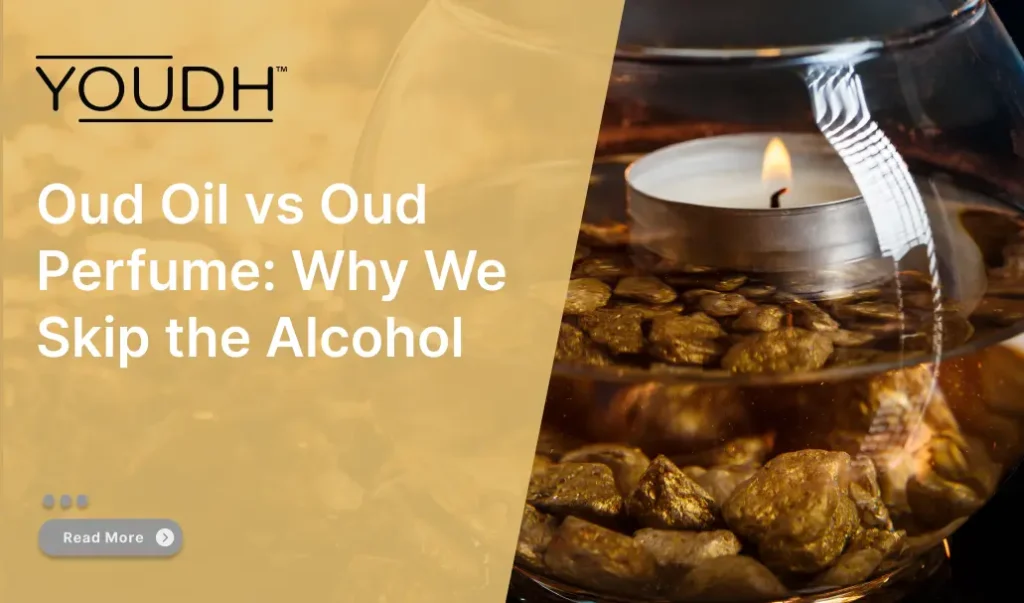
oud oil

The five reasons real oud costs more than gold

Only about 2% of Aquilaria trees ever become infected. Industry estimates put the natural infection rate at around one in fifty wild trees. Some sources put it as high as 7%, but most agree real oud only forms in a small minority of trees, even in the right conditions.

Premium oud needs decades to mature. The most sought-after grades come from trees that have carried the infection for 40 to 100 years. The longer the resin develops inside the wood, the richer and more complex the final oil becomes. This time investment cannot be sped up.

Distillation yield is below 0.5%. Roughly 70 kilograms of agarwood chips produce only about 20 millilitres of oud oil. Every drop of real oud represents a significant amount of raw material consumed.

Aquilaria is internationally protected. Most Aquilaria species are listed under CITES, the Convention on International Trade in Endangered Species. Wild populations across India, Cambodia, and Indonesia have been pushed close to exhaustion by decades of unregulated harvesting. What remains is legally restricted, requiring permits and traceability. This adds cost and limits supply.

The work cannot be mechanised. Identifying infected trees deep in dense forest takes years of experience. Sorting wood chips by resin density is done by hand. Master distillers spend a working lifetime learning the precise temperature, water quality, and timing needed to coax good oil from the wood. A poorly run distillation can ruin a whole batch. Every step depends on skilled human work.

Each of these factors compounds. Add them together and you get a material that is genuinely scarce, slow to produce, legally constrained, and impossible to scale.

How much does real oud actually cost?

Real oud has a wide price range, which is part of why the market confuses people.

At the accessible end, real oud oil sourced from younger Aquilaria trees costs around £15 to £50 per gram. A 3ml bottle in this range typically sells for £45 to £150. This is where most ethically sourced everyday-wearable oud sits, including our own.

Mid-grade real oud, from older infected trees with longer-aged resin, costs £50 to £150 per gram. A 3ml bottle of this grade sells for £150 to £450.

Premium aged oud, the kind perfumers and serious collectors seek out, costs £150 to £400 per gram or more. Cambodian and Hindi ouds from trees infected for 40 years or longer sit at this level.

At the rarest end, oud oil distilled from 100-year-old infected trees has sold at auction for over £100,000 per kilogram. These are heirloom-grade materials, not retail products.

For comparison, gold currently trades at around £111 per gram in 2026. Mid-grade and premium real oud match or exceed that price gram for gram. The very rarest aged ouds have always exceeded it. This is why oud has been called liquid gold and black gold for centuries. The nicknames predate the current gold rally — they reflect a long historical pattern of premium oud holding its value alongside or above precious metal.

What this means for buyers is simple. A 3ml bottle of real oud at £45 is realistic for accessible-grade material, especially when sourced directly from ethical suppliers without the markup of designer fragrance houses. A 100ml alcohol-based spray sold as “pure oud” at high street pricing cannot, mathematically, contain meaningful real oud. The format and the price have to match the material.

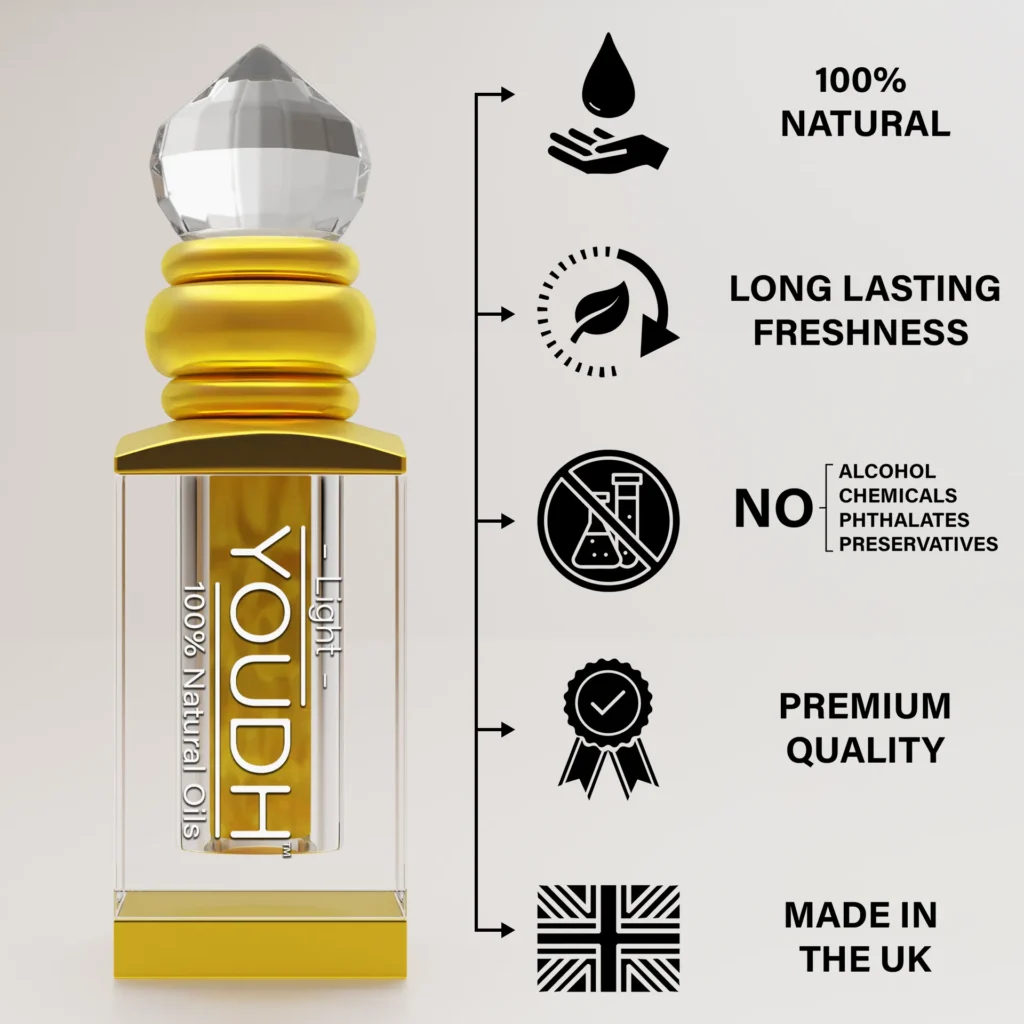
Light Features1

The information most "oud" articles will not tell you

Here is the part competitors leave out.

The vast majority of perfumes sold with “oud” in the name contain almost no real oud. Designer “oud” fragrances priced between £80 and £300 are usually built around synthetic oud accords, which are lab-created blends of aroma chemicals designed to imitate the smell of agarwood. Real oud, if it is present at all, is usually in trace amounts, often blended into solvents and alcohol bases.

This is not a secret in the perfume industry. It is widely known among perfumers and natural ingredient suppliers. The maths makes it impossible to do otherwise. If real oud oil costs £3,000+ per kilogram at the cheap end, a £100 retail bottle cannot contain more than a few drops, even before you account for packaging, marketing, and retail margin.

What this means for buyers is simple. When you pay £200 for a “luxury oud,” most of what you are paying for is the brand and the synthetic recreation of the oud smell, not the rare natural material itself. Some houses are transparent about this and use terms like “oud accord” on their notes lists. Many are not.

This is one of the main reasons we built YOUDH. Modern fragrance markets have made it harder, not easier, to actually buy real oud. The word has been borrowed and diluted to the point where most people who buy “oud” have never smelled the real thing.

How to tell if an oud perfume is actually oud

Three checks help.

Watch how the scent develops on skin. Real oud is layered and changes character over hours. It opens differently to how it settles. Synthetic oud accords tend to smell flat and one-note from the first minute. They project loudly at first, then thin out, rather than evolving.

Look for transparency in sourcing. Brands working with real natural oud will tell you which Aquilaria species they use, where it is sourced from, and how it is processed. Generic claims like “luxurious oud essence” without species or origin usually mean an accord. At YOUDH, we use traditions tied to Aquilaria malaccensis, Aquilaria crassna, and Aquilaria sinensis, sourced from Vietnam, Sri Lanka, and parts of South Asia.

Check whether the format matches the material. Pure oud oil is almost always sold in small bottles, usually 3 to 10 millilitres. It is rarely cut with alcohol. If a 100ml alcoholic spray is being sold as “real oud” at high-street pricing, the maths does not add up — there is not enough real oud in the bottle to justify the claim. Real oud format is concentrated and applied a single drop at a time. That is the format the material is suited to. Our fully natural oud range follows this principle: 3ml bottles, oil-based, one drop per application.

Is real oud worth the price?

That depends on what you are looking for.

If you want a strong synthetic woody scent for daily wear, plenty of designer oud fragrances will do the job and cost less. There is nothing wrong with that, as long as you know that is what you are buying.

If you want what oud actually smells like, the deep, evolving, slightly animalic aroma that has been used in religious ceremony, royal courts, and luxury perfumery for over 1,400 years, then yes, the real thing is worth it. Once you have smelled real oud, you can tell the difference. A small bottle lasts a long time because only a single drop is needed per application.

The question is not really whether oud is expensive. The question is whether what you’re paying for is actually oud. Real oud at the accessible end of the price spectrum is genuinely affordable for daily wear — far more affordable than the synthetic ‘luxury oud’ bottles that dominate department store shelves. To browse the best oud fragrances made with 100% natural oud oils, you can start with our 3ml range.

Have Questions?

Fill in the form below to get some answers.

Contact Information

Frequently Asked Questions: OUD Fragrance (OUDH)

Is oud more expensive than gold?

Yes, premium oud oil regularly matches or exceeds the price of gold per gram. Standard gold sits at around £58 per gram, while premium aged oud oil from older Aquilaria trees can sell for £75 to £100 per gram or more. Cheaper grades of oud cost less than gold, but the highest-quality material is consistently more valuable. This is why oud has been called liquid gold for centuries.

How much does a bottle of real oud oil cost?

Real oud oil has a wide price spectrum depending on the age of the source tree and the region it comes from. A 3ml bottle of accessible-grade real oud, sourced from younger Aquilaria trees, typically costs £45 to £150. Mid-grade real oud sits between £150 and £450 per 3ml. Premium aged oud from older infected trees can cost £450 to £1,200 or more per 3ml. The lower end of the spectrum is where most everyday-wearable real oud sits — affordable, genuine, and made for daily use rather than collection.

Why do designer oud perfumes cost less than pure oud oil?

Designer oud perfumes mostly use synthetic oud accords, which are aroma chemical blends designed to imitate real oud at a fraction of the cost. Some include trace amounts of real oud, but the bulk of the formulation is alcohol, solvents, and synthetic ingredients. Real oud oil is too rare and expensive to use at scale in mass-market fragrances.

Where does real oud come from?

Real oud comes from Aquilaria trees native to Southeast Asia. The main growing regions are India, Bangladesh, Cambodia, Vietnam, Malaysia, Indonesia, and parts of South Asia and Sri Lanka. Each region produces oud with a slightly different scent profile. Hindi oud tends to be earthy and animalic. Cambodian oud is sweeter. Malaysian oud is cleaner. Vietnamese oud is often creamy and floral.
At YOUDH™, we pride ourselves with 100% Natural, Non-Allergen, Non-Hormone Disrupting Premium grade oud fragrance oils (oudh). YOUDH™ will never sacrifice purity for profit. 

MORE Blog POSTS

At YOUDH™ we pride ourselves with 100% Natural, Non-Allergen, Non-Hormone Disrupting Premium grade fragrance oils.

Main Menu

Newsletter

Sign up to our newsletter