
An oud scent is rarely one thing. Two oud fragrances side by side can smell almost nothing alike, yet both can be undeniably oud. One can lean honeyed and sweet, the other dry and smoky. One can read floral and rounded, the other dark and animalic. This oud scent guide explains exactly why, by walking through the regional differences that shape every oud smell, the chemistry behind the scent, and the way perfumers transform raw oud into the finished fragrance you wear.
If you have ever wondered why an oud scent from one bottle smells nothing like an oud fragrance from another, the answer is in three places: where the oud came from, how the tree produced its resin, and what the perfumer chose to do with it.
Every oud scent traces back to the Aquilaria tree. But the oud smell you eventually wear is shaped long before any perfumer touches it. The species of Aquilaria, the climate it grew in, the type of fungal infection that produced the resin, and the age of the wood all influence the final oud scent profile.
There are several species of Aquilaria used in oud production. The most common are Aquilaria malaccensis, Aquilaria crassna, and Aquilaria sinensis, which grow across Southeast Asia. All are listed under CITES Appendix II, the international agreement controlling trade in vulnerable species. Each species, and each region within it, produces an oud scent with a distinct character.
Serious oud wearers learn to recognise oud by geography. Each region has a signature oud scent, shaped by climate, soil, the local Aquilaria species, and centuries of distillation tradition.
Indian oud, particularly from Assam, is the deepest and most polarising oud scent. The oud smell here is dark, woody, and openly animalic. It carries notes of leather, smoke, and a barnyard warmth that hits hard in the first minutes, then softens into a deep, resinous wood. This is the oud scent most associated with traditional Gulf perfumery and the kind worn for religious occasions and weddings. Indian oud is also the most expensive and the rarest, because the wild Aquilaria malaccensis populations of Assam have been heavily protected.
Cambodian oud is the most approachable oud scent for newcomers. The oud smell leans sweet and balsamic, with notes of dried fruit, warm honey, and a soft resinous depth. The animalic edge is gentler, the smoke is rounder, and the overall feel is luxurious rather than confronting. This is the oud scent that translates most easily into Western perfumery, and it forms the base of many famous luxury oud fragrances.
Vietnamese oud, particularly from Central Vietnam, has a clean, almost ceremonial smokiness. The oud scent is smoother than Indian oud, but more incense-driven than Cambodian. It often shows notes of dry wood, soft smoke, and a faint sweetness underneath. Thai oud sits close to Vietnamese in character, but is sometimes greener and slightly more medicinal.
Malaysian oud, often from Aquilaria malaccensis grown in different conditions than Indian oud, is the most unusual oud scent. The oud smell is woody and resinous like other oud, but carries a fresh, almost mossy or herbal top note. This makes Malaysian oud the lightest and most modern feeling of the traditional oud scent profiles. Bornean oud is similar, with an even greener character.
Smaller production regions like Sri Lanka and Hainan in southern China produce limited quantities of oud, often with their own distinctive oud scent. Sri Lankan oud can be smooth and slightly fruity, while Hainan oud is often considered some of the finest in the world: balanced, deeply resinous, and with great longevity.
The complexity of any oud scent comes from the molecules inside the resin. Real oud oil contains hundreds of aromatic compounds, and each contributes a different facet of the oud smell.
The woody depth of the oud scent comes mainly from sesquiterpenes, the same family of molecules found in sandalwood and cedar. These give oud its dry, structural quality.
The balsamic sweetness comes from chromones, a group of compounds unique to agarwood. These are what give Cambodian oud its honeyed feel, and what separate the oud scent from any other woody material.
The smoky and slightly animalic notes come from compounds produced as the tree’s resin oxidises and ages. The longer the oud oil is aged after distillation, the more these compounds mature, and the smoother the final oud scent becomes.
This is why an oud scent is impossible to fake perfectly. Synthetic oud accords copy a handful of the most recognisable molecules, but cannot reproduce the hundreds of trace compounds that make a natural oud smell evolve over hours on skin.
Once a perfumer has chosen their oud, they shape its character with other natural materials. The right pairings can soften an oud scent, brighten it, deepen it, or push it into a completely new direction.
Rose is the classical partner to oud, especially in Middle Eastern perfumery. Rose lifts the heavier animalic facets of the oud scent and adds a fresh, floral top to the wood. This is the oud smell of traditional Khaleeji perfumery and the reason rose oud is one of the most loved fragrance pairings in the world.
Vanilla rounds out an oud scent and makes it warmer and sweeter. The result is a gourmand oud smell that feels comforting and modern. Vanilla also softens any smoky edges, which is why vanilla oud is often recommended for people new to wearing oud.
Amber, which is itself a blend of warm balsamic materials like labdanum and benzoin, deepens an oud scent without changing its character. The result is a rounder, fuller oud smell that wears more smoothly through the day.
Bergamot, lemon, and other citrus oils lift an oud scent at the top, making the opening fresher and brighter. The deeper oud smell still appears as the citrus fades, but the overall impression is lighter and more wearable for daytime.
Sandalwood adds a creamy smoothness to the oud scent. It softens the dry, smoky aspects of oud and creates a richer, more luxurious base. This is one of the most classical oud pairings in both Indian and Arabian perfumery.
Even within the same bottle, an oud scent changes hour by hour. Understanding this evolution helps you appreciate what you are wearing, instead of judging the fragrance from the first thirty seconds.
In the first ten minutes, you smell the top of the oud scent: often the smokiest, sharpest, or most animalic facet. This is where the oil is reacting to the warmth of your skin for the first time. New wearers often find this opening surprising.
Between ten minutes and the first hour, the oud smell rounds out. The smoke calms, the sweetness comes forward, and the wood begins to feel polished rather than raw. This is where the personality of the oud scent really shows.
From the first hour onwards, the oud scent settles into its long heart phase. The oil sits closer to your skin, the scent becomes more personal, and you may notice it most when you move, when you warm up, or when someone leans in close. This is the phase where most wearers fall in love with their oud.
By the end of the day, the oud smell becomes a soft, intimate skin scent: warm, resinous, and quietly present. On clothing, the oud fragrance can linger for several days.
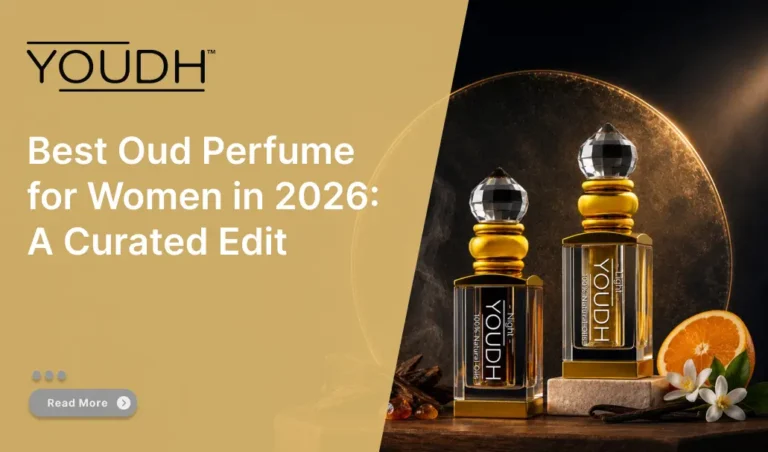
At YOUDH, we work with two clear directions for the oud scent, both built around natural oud oil and crafted in the UK without alcohol, synthetic additives, or hormone-disrupting chemicals.
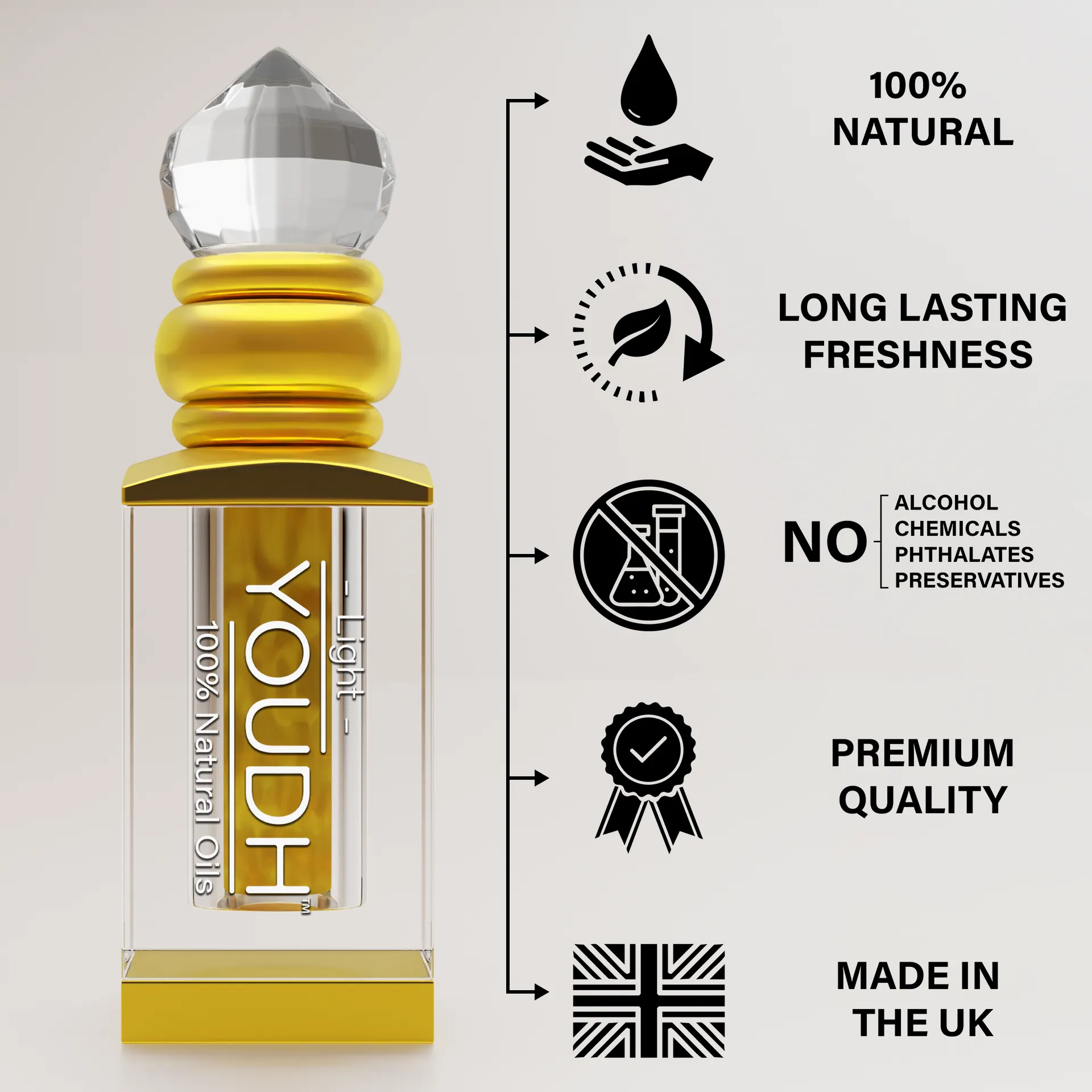
YOUDH Light is the brighter, softer side of the oud smell. Natural oud oil is paired with citrus, vanilla, and floral notes to create an oud scent that is warm but lifted, comfortable in the office or in warmer weather, and easy to wear for someone trying oud for the first time. The oud is still there, grounded and woody, but balanced by lighter top notes.
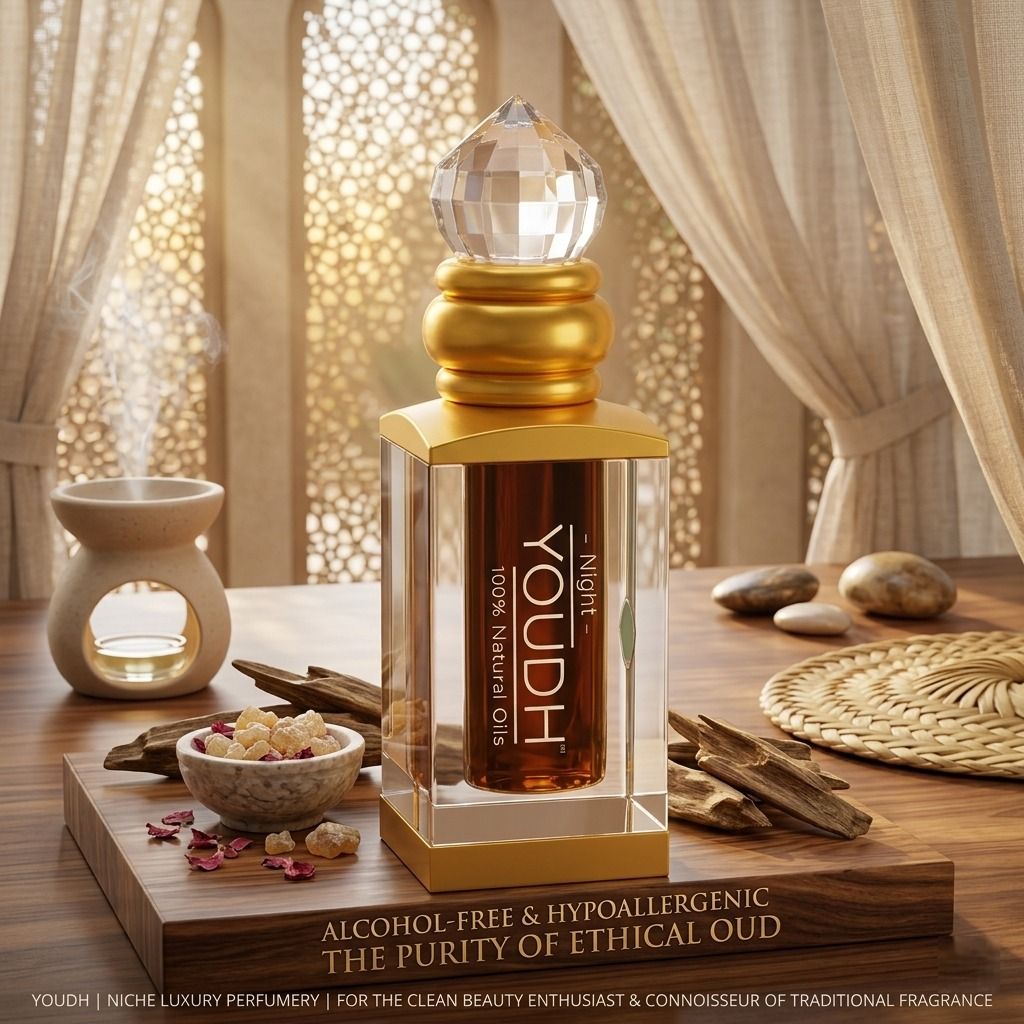
YOUDH Night is the deeper, more traditional oud scent. The oud smell here is woody, smoky, and quietly intense, with musk and resin shaping the trail. This is the oud fragrance for evenings, colder months, and wearers who want the full classical depth of natural oud oil.
Both are oil based and non-alcoholic, which lets the oud scent unfold properly on the skin instead of being flattened by alcohol evaporation.
The best way to understand the oud smell is to wear it. Reading about an oud scent can take you only so far. The oud changes on every person, which is why what suits one wearer may feel completely different on another.
If you prefer brighter, warmer fragrance, start with YOUDH Light. If you want the full depth of traditional natural oud, go straight to YOUDH Night. A single 3ml bottle lasts daily wearers around three months, because real oud only needs a drop.
Explore the YOUDH range to find your oud scent, or read our companion guide on what oud oil is and how it is made for a deeper look at the source. Free UK delivery on orders over £50.
Rose oud perfume is the pairing of two of perfumery’s most powerful natural materials: the deep, resinous warmth of oud and the fresh, layered sweetness of rose. It is one of the oldest and…
You spray a designer oud, catch a rich opening, and by lunchtime it has all but vanished. That fade is not bad luck. It is chemistry. Most oud you buy on the high street is an oud perfume: a small…
What Is Attar? The Complete Guide to Traditional Perfume Oil Attar is one of the oldest continuously used perfume traditions in the world. For over a thousand years, attar has been the foundation of…
Walk into any traditional perfume shop in the Gulf and you will find rows of small bottles labelled mukhallat. The word covers a category of fragrance that has shaped Arab perfumery for centuries,…
You light your first oud incense cone, expect a deep warm scent to fill the room, and instead get a sharp synthetic smoke that fades in ten minutes. The problem is not your technique. Most so-called…
Oud wood is the rarest fragrant wood in the world. A single kilogram can cost more than gold. Agarwood has been burned in homes across the Middle East, India, and Southeast Asia for over a thousand…
Can females wear oud? The short answer is yes, absolutely, and they have been doing so for over a thousand years. Can females wear oud the same way men do? Yes, with the same application techniques…
The best oud perfume for women has nothing to do with whether oud is masculine or feminine. Oud has been worn by women across the Middle East, South Asia, and North Africa for over a thousand years,…
Oud is the most powerful fragrance in a man’s collection, and the most easily wasted. Apply oud for men the wrong way and you get a fragrance that fades by lunch, projects too loudly, or never…