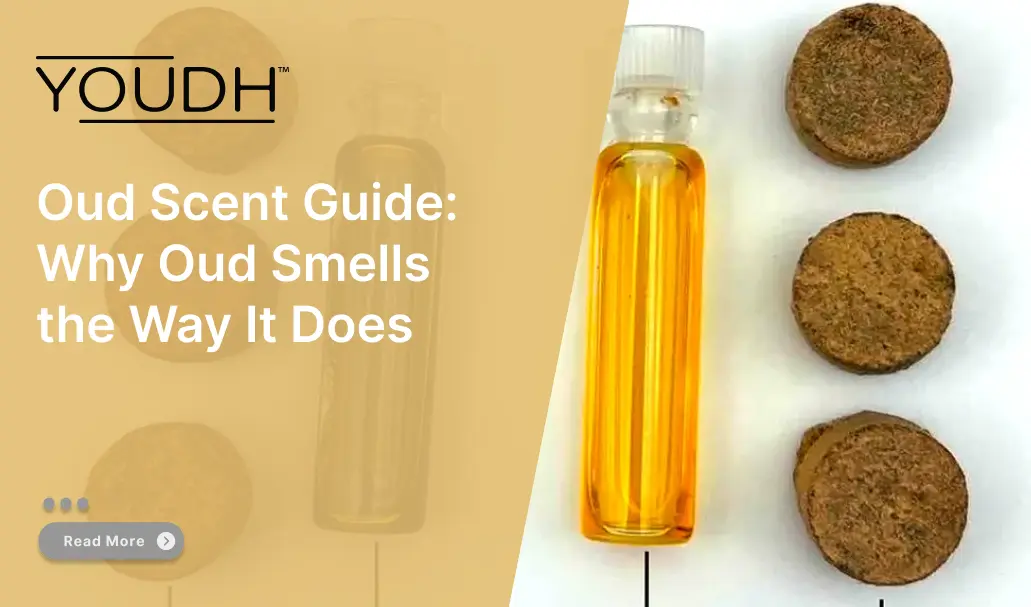

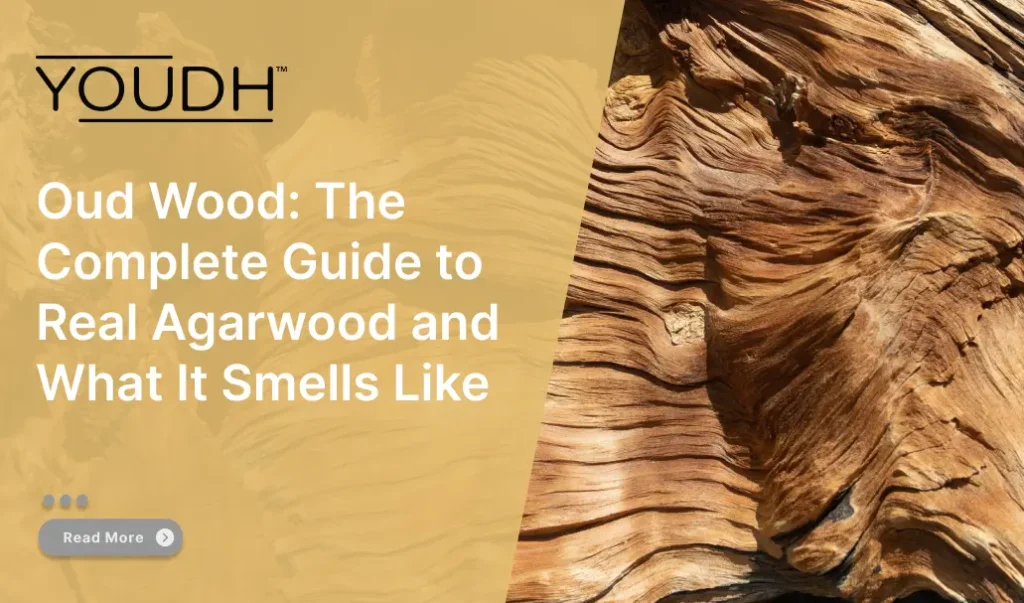
Oud wood is the rarest fragrant wood in the world. A single kilogram can cost more than gold. Agarwood has been burned in homes across the Middle East, India, and Southeast Asia for over a thousand years, valued so highly that it is referenced in ancient Sanskrit texts, classical Arabic poetry, and authentic Islamic hadith. If you have been searching for what oud wood actually is, where it comes from, how it smells, or how to buy the real thing without being misled, this guide is the complete picture.
Oud wood is not a single product. The term covers raw agarwood chips for burning, blocks for collectors, the heartwood inside the living Aquilaria tree, and the oil distilled from it. This guide walks you through all of it: what it is, how it forms, the regional varieties, the smell when burned, and how to choose quality material for your home or collection.
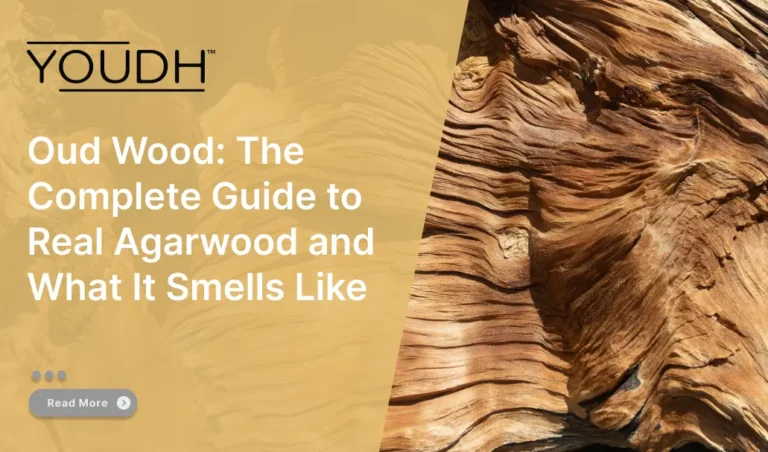
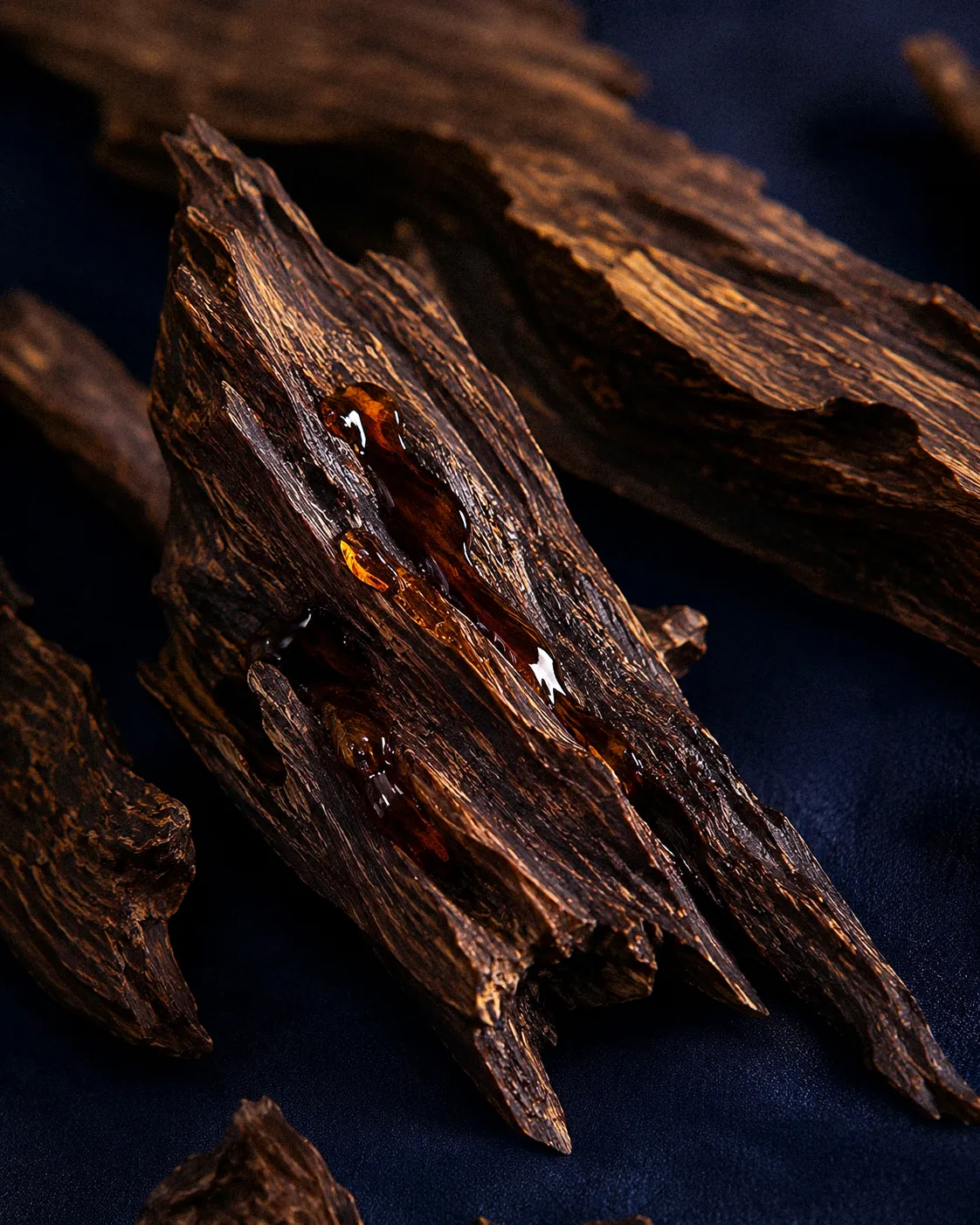
Oud wood is the dark, resinous heartwood produced inside the Aquilaria tree after the tree becomes infected by a specific species of mould. The healthy Aquilaria tree has pale, unscented wood. The resin only forms when the tree is wounded, the mould enters the wound, and the tree responds by producing a thick, fragrant resin to seal off the infected tissue. Over years, sometimes decades, that resin saturates the heartwood, transforming pale, ordinary wood into dark, dense, intensely fragrant agarwood.
So agarwood is, technically, sick wood. The disease of the tree is the source of the scent. This is one of the strangest facts about it: a perfectly healthy Aquilaria tree produces no resin at all, and the resin that makes the wood valuable is the tree’s defence against its own decay. Without the infection, there is no oud. With the infection, the tree produces one of the most prized natural materials in the world.
Oud wood is also known as agarwood, aloeswood, or eaglewood. All four terms describe the same resin-saturated heartwood, but oud wood is the name most commonly used in fragrance and across the Middle East. The word oud comes from the Arabic for wood, and the term is literally just that: the wood.
All real agarwood comes from trees in the Aquilaria genus, native to South and Southeast Asia. The three commercially important species are Aquilaria malaccensis, Aquilaria crassna, and Aquilaria sinensis.
Aquilaria malaccensis grows across India, Bangladesh, Bhutan, Myanmar, Malaysia, and Indonesia. This is the species behind classical Indian oud and is one of the most heavily protected, because wild populations have been depleted by centuries of demand. The species is listed on CITES Appendix II, the international agreement that regulates trade in species threatened by exploitation. Anyone selling legitimate agarwood from this species needs the right permits and traceability.
Aquilaria crassna is the main species in Cambodia, Vietnam, Thailand, and Laos. This is the source of most Cambodian and Vietnamese oud, which tends to have a softer, sweeter, more honeyed scent than the Indian variety. Aquilaria sinensis grows mainly in southern China and Hainan, producing some of the most refined agarwood in the world, with a clean, balanced, resinous character.
The Aquilaria tree itself can grow to 40 metres tall. In healthy growth, it is unremarkable: pale wood, ordinary appearance. The resin forms only when the tree is wounded and infected, which in the wild happens by accident: lightning strikes, insect bores, fallen branches. Today, most legitimate agarwood comes from cultivated plantations where trees are deliberately inoculated to encourage resin production, which reduces pressure on wild Aquilaria populations.
Agarwood is one of the few perfume materials produced by disease. The process is slow, biological, and almost impossible to industrialise. Understanding how it forms explains both the price and the depth of the scent.
Agarwood cannot form in a healthy, undamaged Aquilaria tree. The bark and outer wood need to be broken, exposing the inner heartwood to the surrounding environment. In the wild, this happens by chance. In plantations, growers deliberately wound trees with cuts, drilled holes, or controlled inoculation to start the process.
A specific group of moulds, most commonly Phaeoacremonium, enter the wound. The fungal infection spreads slowly through the heartwood, triggering the tree’s defence response.
In response to the infection, the Aquilaria tree produces a thick, dark, aromatic resin that gradually saturates the surrounding wood. This is the resinous heartwood itself, progressively soaked in defensive material. The more resin produced, the darker, denser, and heavier the wood becomes. Premium agarwood is so saturated with resin that it sinks in water, which is where the term sinking agarwood comes from.
Agarwood does not appear overnight. A young infection may take ten years to produce a workable amount of resin. The most prized agarwood, dense and dark with resin, can come from trees that have been quietly developing for thirty, fifty, or more years. This is one reason real oud is so rare. Even when an Aquilaria tree does start producing resin, the process takes decades to reach the quality that connoisseurs value.
The smell is unlike anything else in fragrance. When burned, it releases a layered scent that combines four distinct qualities, each present at different intensities depending on the origin and grade.
The foundation of the scent is the wood itself: dense, polished, dry. Think aged hardwood like teak or rosewood, but warmer and more resinous. This is the backbone of the scent and what gives it the structural quality wearers associate with oud.
Underneath the wood is the balsamic warmth of the resin. This is what makes oud smell rich rather than dry, with a soft sweetness that reminds many people of warm amber or labdanum. Cambodian agarwood is particularly known for this honeyed, balsamic quality.
Oud wood produces a clean, soft smokiness when burned, distinct from the harsh smoke of ordinary firewood. This is the scent most associated with traditional incense burning across the Middle East and Asia. Vietnamese and Hainan agarwood often lead with this incense-like quality.
The most divisive layer of the scent is the animalic warmth: a leathery, slightly funky depth that signals you are smelling something natural and alive. Indian agarwood is famous for this animalic edge. New wearers sometimes find this surprising in the first minutes. Connoisseurs treat it as the signature of real oud.
The exact balance varies by origin. Indian oud is dark, dense, and animalic. Cambodian oud is honeyed and balsamic. Vietnamese oud is incense-like and clean. Malaysian oud is greener and fresher. Each region produces agarwood with a distinct character that connoisseurs can identify by smell.
Not all oud wood is the same. It is graded by resin content, age, region, and the way the wood was harvested. Understanding grades helps you avoid paying premium prices for low-grade agarwood.
The highest grade. Sinking agarwood is so heavily saturated with resin that it sinks in water rather than floating, which is how the grade gets its name. This wood is rare, often aged for decades inside the tree, and can sell for thousands of pounds per kilogram. It produces an intensely complex, long-lasting scent when burned.
Premium chips have high resin content but do not always sink. The wood is dark, visibly oily, dense in the hand, and produces a deep, layered scent when burned. This is the grade most serious collectors use for daily incense burning.
Mid-grade material has moderate resin content. The chips are lighter in colour, less dense, and produce a softer, less complex scent. It is suitable for everyday home fragrance and is the grade most commonly sold in Gulf markets at accessible prices.
Low-grade agarwood has minimal resin content and produces little scent. Some sellers adulterate it by soaking the wood in synthetic fragrance oils to imitate higher grades. Adulterated material burns with a harsh, chemical smell rather than the clean, layered scent of real oud. Always buy from sellers who are transparent about grading and sourcing.
Oud wood and oud oil come from the same source but are used differently. The wood is the resinous heartwood itself, burned as chips or carved into objects. Oud oil is the concentrated fragrance distilled from it. Both come from the Aquilaria tree, both carry the signature oud scent, but they suit different uses.
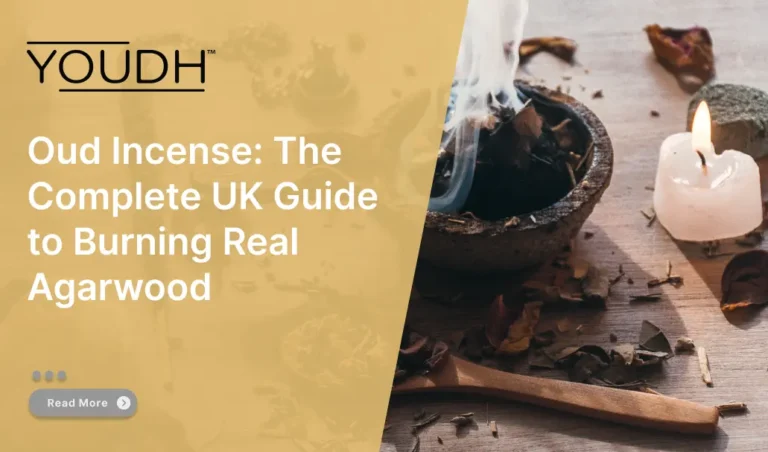
Oud wood is the traditional incense form. Chips are placed on hot charcoal or in an electric burner, and the heat releases the resinous scent. This is how agarwood has been used in Gulf, Yemeni, and South Asian homes for centuries: to scent rooms, perfume clothes, and welcome guests. The scent fills a space and clings to fabric and hair for days.
Oud oil is the distilled essence of agarwood. Many kilograms of wood are needed to produce a few millilitres of pure oil. The oil is applied directly to the skin as a perfume, where it releases the same warm, woody, smoky, resinous scent as burning oud, but personalised by the wearer’s body chemistry. This is how oud has been worn as personal fragrance for centuries.
Most serious collectors use both. Oud wood for the home, oud oil for personal wear, and bakhoor (agarwood blended with other resins and oils) as a third format for daily home use.
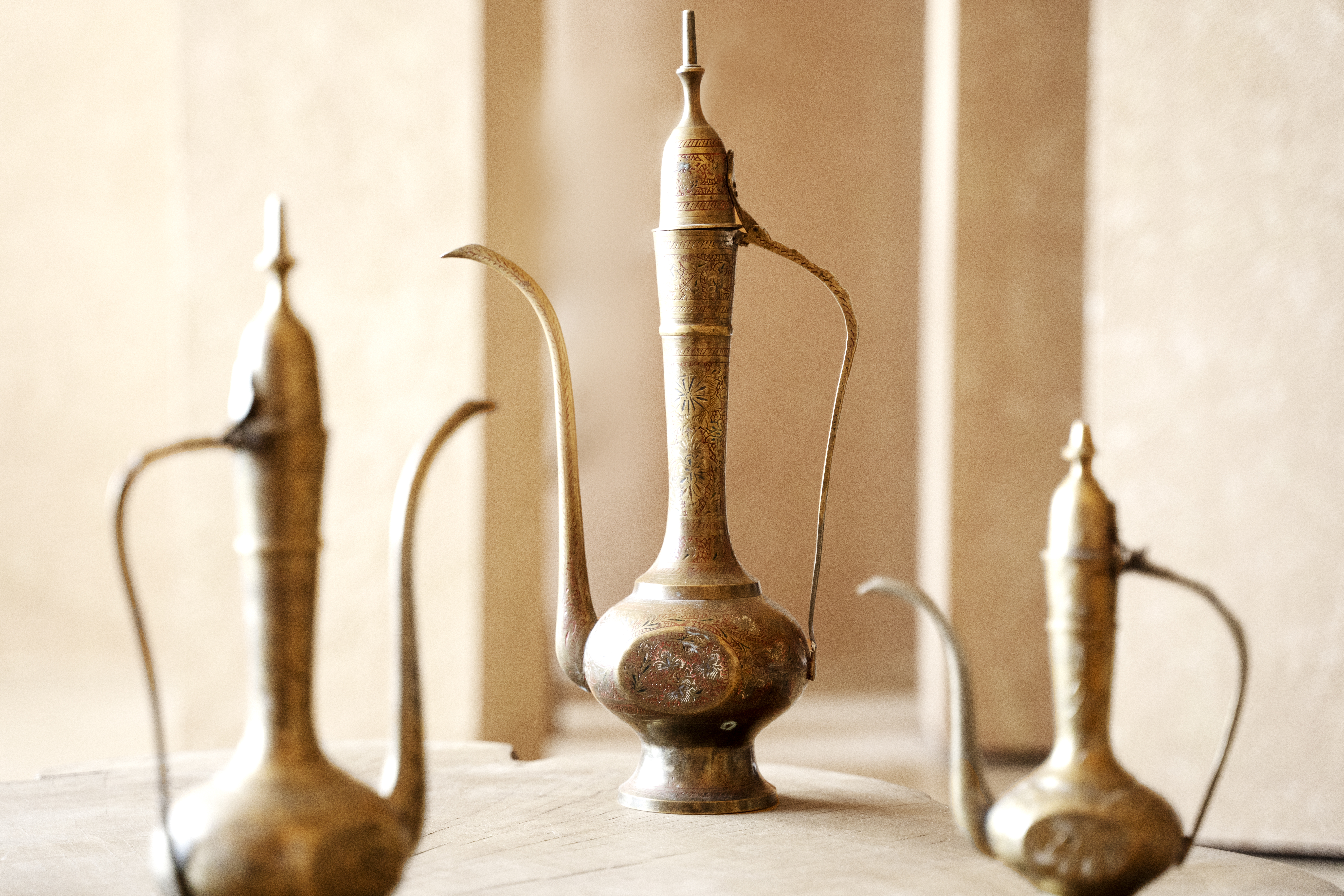
Burning agarwood is one of the most traditional home fragrance practices in the world. The process is simple once you know the steps.
Light a charcoal disc with a flame, holding it with tongs until it begins to spark. Place the charcoal in the mabkhara and wait a minute until it glows red and is covered in fine grey ash. Place a single small piece on top of the charcoal. Within seconds, it will start releasing fragrant smoke.
Carry the burner through the rooms you want to scent. Pause briefly in each space to let the smoke settle. To perfume clothing, hold the garment above the burner and let the smoke rise through the fabric. To scent your hair, lean your head over the burner with care and let the smoke pass through.
Electric oud burners use a heated plate to warm the wood without an open flame. This is the cleaner and safer option for UK flats and homes. Plug the burner in, place a small piece on the plate, and the heat slowly releases the resin. The scent is slightly softer than with charcoal but more controllable.
Less is more. Start with a single small chip, about the size of a fingernail. This is usually enough to perfume a room for thirty minutes to an hour. The smoke continues to scent the space long after the chip stops smoking, and the scent lingers in fabric for hours afterwards.
Agarwood is one of the most expensive natural materials in the world. The price comes from several compounding factors.
First, biological rarity. Industry estimates suggest fewer than two in every hundred wild Aquilaria trees ever develop usable resin. The rest grow tall, healthy, and entirely unscented. Second, time. Agarwood takes years or decades to form, even when the tree is infected. Third, hand harvesting. The resinous wood must be separated from the surrounding unscented material by hand, with skilled cutters judging resin content by sight, smell, and weight. Fourth, regulatory protection. CITES rules add permits, paperwork, and compliance costs throughout the supply chain. Fifth, aging. Premium agarwood is often aged for months or years before sale, which adds capital cost.
High-grade oud wood regularly sells for £100 to £400 per gram, and exceptional aged material from prized regions exceeds that significantly. The most expensive agarwood in the world, sinking grade from old Indian or Hainan trees, can reach prices comparable to the rarest aged whiskies.
The market is full of imitations. A few principles help you buy genuine oud wood without being misled.
YOUDH is best known for natural oud oil, but our commitment to real, ethically sourced agarwood applies to everything we work with. Agarwood, bakhoor, and oud oil all draw from the same source: the resinous heartwood of the Aquilaria tree, treated with the respect that a material with a thousand years of tradition deserves.
If you have been wearing YOUDH oud oil and want to bring the same scent into your home, oud wood and bakhoor are the obvious next step. A small piece of quality agarwood transforms a room. Burned before guests arrive, on Friday evenings, or at Eid and Ramadan, it carries forward a tradition that goes back further than most of modern perfumery.
Explore the YOUDH range to find natural oud in the form that suits you, from oud oil to bakhoor. For more on the source material, read our companion guides on oud oil and what oud smells like. Free UK delivery on orders over £50.
Rose oud perfume is the pairing of two of perfumery’s most powerful natural materials: the deep, resinous warmth of oud and the fresh, layered sweetness of rose. It is one of the oldest and…
You spray a designer oud, catch a rich opening, and by lunchtime it has all but vanished. That fade is not bad luck. It is chemistry. Most oud you buy on the high street is an oud perfume: a small…
What Is Attar? The Complete Guide to Traditional Perfume Oil Attar is one of the oldest continuously used perfume traditions in the world. For over a thousand years, attar has been the foundation of…
Walk into any traditional perfume shop in the Gulf and you will find rows of small bottles labelled mukhallat. The word covers a category of fragrance that has shaped Arab perfumery for centuries,…
You light your first oud incense cone, expect a deep warm scent to fill the room, and instead get a sharp synthetic smoke that fades in ten minutes. The problem is not your technique. Most so-called…
Oud wood is the rarest fragrant wood in the world. A single kilogram can cost more than gold. Agarwood has been burned in homes across the Middle East, India, and Southeast Asia for over a thousand…
Can females wear oud? The short answer is yes, absolutely, and they have been doing so for over a thousand years. Can females wear oud the same way men do? Yes, with the same application techniques…
The best oud perfume for women has nothing to do with whether oud is masculine or feminine. Oud has been worn by women across the Middle East, South Asia, and North Africa for over a thousand years,…
Oud is the most powerful fragrance in a man’s collection, and the most easily wasted. Apply oud for men the wrong way and you get a fragrance that fades by lunch, projects too loudly, or never…