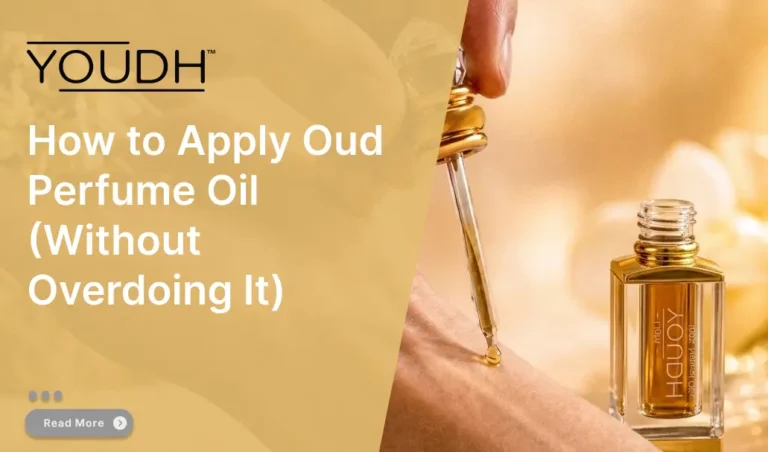

Oud perfume oil is easy to overdo if you’re used to alcohol sprays, since a little covers far more ground than it looks like it will. Two to three drops on warm pulse points is enough for most people to get a full day of wear without tipping into overwhelming, which is a genuinely common worry for anyone switching from a spray for the first time.
It’s also the single most common hesitation new oud buyers raise before they order: not whether they’ll like the scent, but whether they’ll know how to wear it without either underdoing it or filling a room. Both are avoidable once you know what oud oil actually does on skin. This guide walks through exactly how to apply oud: how many drops to use, where to put it, what to avoid, how to layer it, and how to refresh it later in the day without reaching for more than you need.
Start with one drop per pulse point, two at most. Oud oil is far more concentrated than a spray, since there’s no alcohol or water diluting it, so a single drop rubbed lightly onto the wrist or neck goes further than a full spray from an alcohol-based perfume. That concentration is exactly what makes it easy to over-apply without realising, since the instinct trained by years of spraying perfume doesn’t map cleanly onto drops of oil.
If it’s your first time wearing it, apply one drop, wait ten minutes, then decide whether you actually want more. Most people find they never need to. Skin type plays a role here too: oilier skin tends to hold and slightly amplify the scent, while very dry skin can make it feel like it’s fading faster than it is, which is more a perception issue than the oil actually being gone. Either way, resist the urge to judge how much you need in the first minute or two. Oud oil isn’t designed to make its full impression immediately.
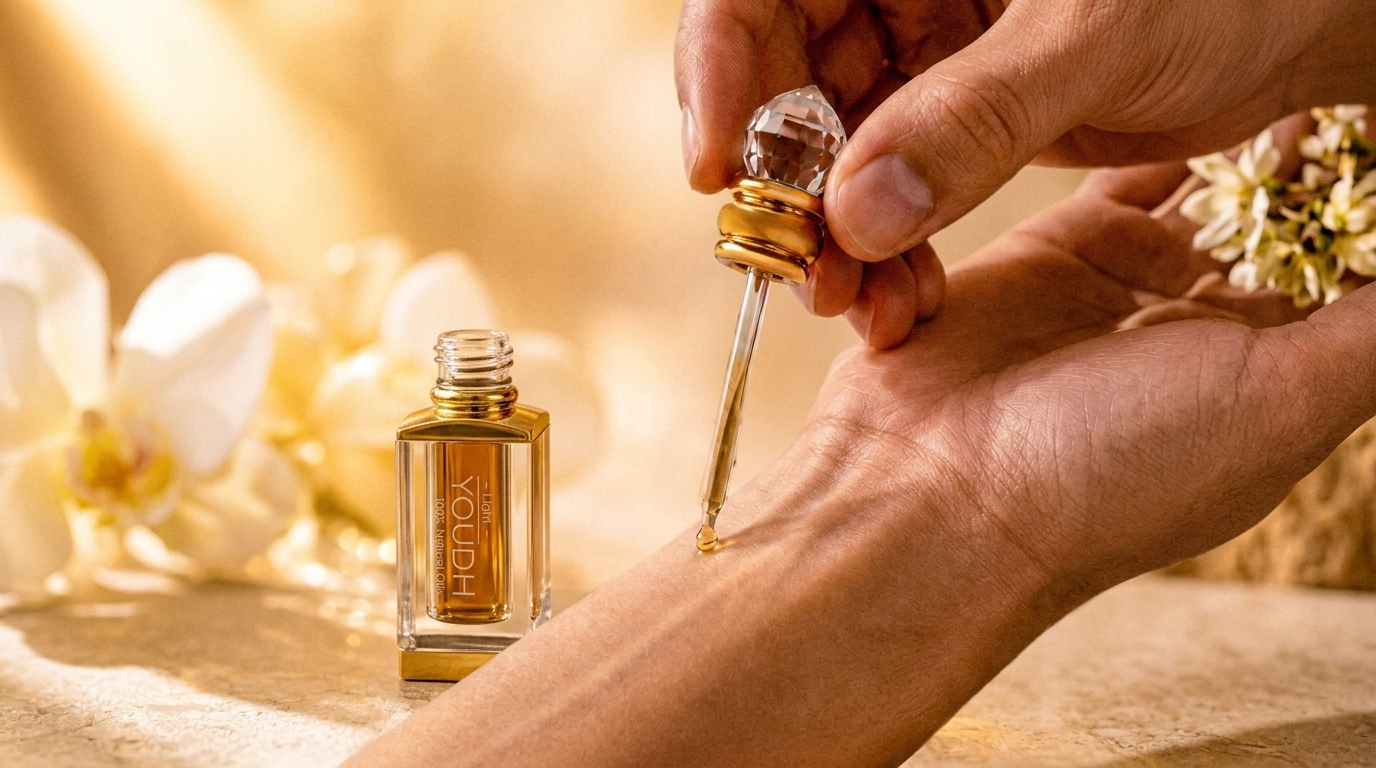
Pulse points, the wrists, the side of the neck, behind the ears, are the classic spots because they run slightly warmer than the rest of the skin, and that warmth is what releases the scent gradually through the day rather than all at once. Dab rather than rub it in; oud oil doesn’t need to be worked into the skin the way a lotion does, and rubbing doesn’t help it absorb any faster.
Applying to freshly moisturised or slightly damp skin, straight after a shower for example, helps the oil hold longer than it will on very dry skin, since there’s less immediate absorption pulling it in before it’s had a chance to develop. Keep it off clothing and fabric where possible, since oil-based fragrance can leave a mark that an alcohol-based spray, which dries clear, doesn’t. If you want to scent a scarf or item of clothing specifically, test a hidden seam first rather than applying directly to a visible area.
The most common mistake is adding more oil because you can’t smell it right away. Oud oil builds slowly, so give it fifteen to twenty minutes before deciding you need another drop; most of the time you won’t, and a second application on top of the first one tends to muddy the scent rather than strengthen it.
The second mistake is applying it to broken, irritated or freshly shaved skin, which raises the chance of any fragrance ingredient causing a reaction, oud oil included. If you’re trying oud oil for the first time and have sensitive skin, testing a small amount on the inner forearm before a full application is a sensible precaution, the same one dermatologists recommend for any new product on skin, not something specific to fragrance.
That’s in line with the general patch-testing guidance the NHS gives for trying new products on skin. Give it 24 to 48 hours before applying more broadly if you do test it first. Finally, keep oud oil away from direct heat and sunlight in storage; both can shift how the oil smells over time, the same as they would with any concentrated natural oil.
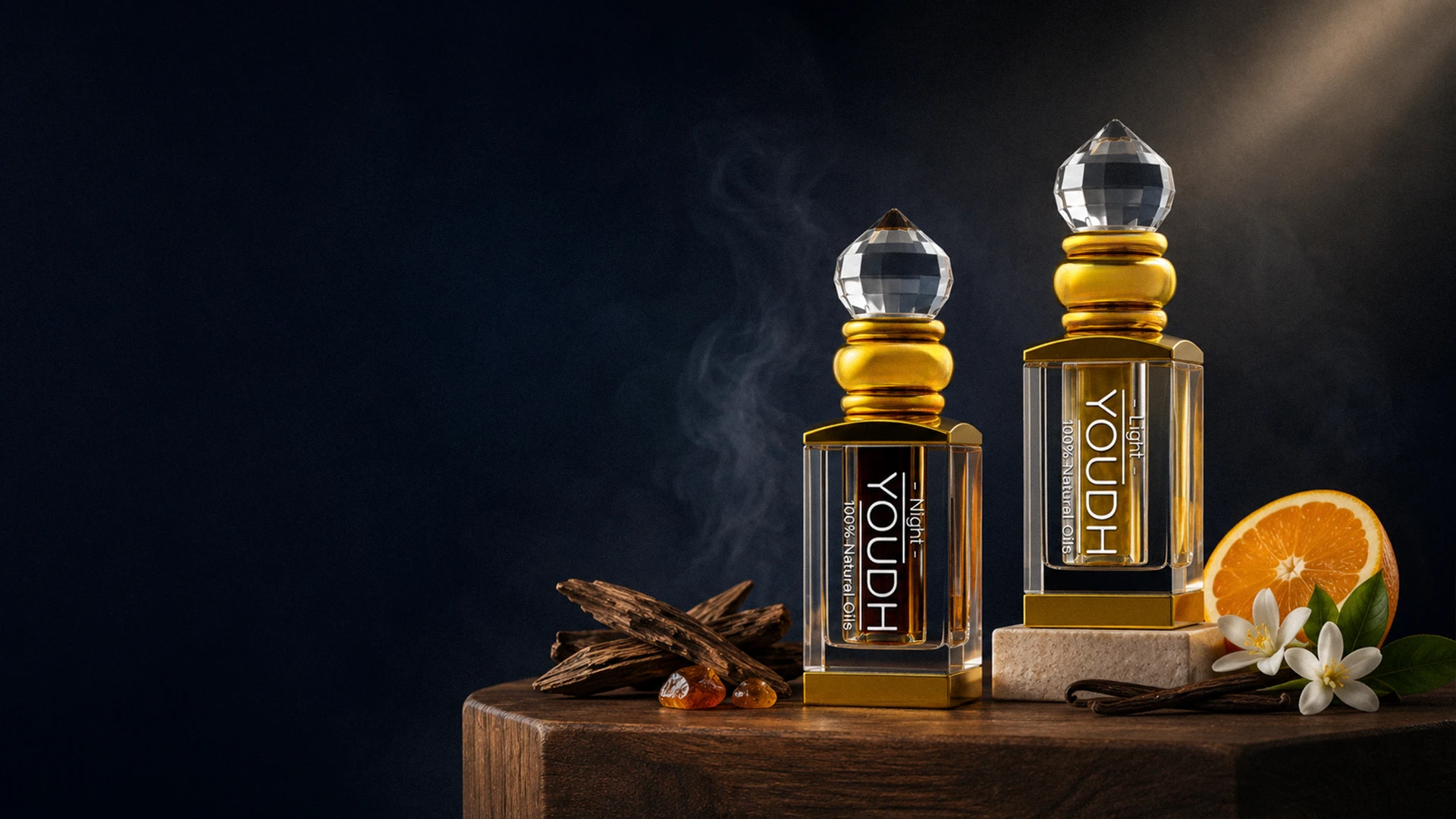
YOUDH Night and Light can be worn together as well as separately. Applying Light to the wrists and Night to the neck, for example, lets the citrus and floral top layer soften the deeper woody base without needing a third product to bridge them. There’s no fixed rule for which goes where; it’s worth trying both combinations to see which reads better on your own skin.
If you’d rather layer with something unscented, apply a fragrance-free moisturiser first; damp, hydrated skin holds oil-based fragrance longer than dry skin does, for the same reason mentioned in Step 2. Avoid layering oud oil under or over a strongly scented alcohol-based spray, since the alcohol’s fast evaporation tends to overwhelm the slower, quieter development of the oil underneath it, and you’ll end up smelling mostly the spray. You can compare both formats on the full oud perfume range if you want to try layering for yourself.
Because oud oil sits close to the skin rather than projecting outward, it’s normal to stop noticing it on yourself a few hours in, even though people near you still can. This is sometimes called nose fatigue or scent blindness, and it happens with almost any fragrance, not just oud oil; your nose simply adjusts to a smell it’s been exposed to continuously.
If you genuinely want a top-up rather than just a fresh sense of it, one more drop on a pulse point you haven’t already used, behind the ear rather than back on the same wrist, refreshes the scent without stacking product on the same spot. Read more about how oud oil is actually made for more on why it wears the way it does across a full day.

Oud perfume oil is easy to overdo if you’re used to alcohol sprays, since a little covers far more ground than it looks like it will. Two to three drops on warm pulse points is enough for most…
You spend months developing a scent, sourcing oud oil, testing blends, and getting the packaging right. Then you book a weekend pop-up to finally let people smell it in person, and the thing nobody…
Oud oil generally lasts longer on skin than an alcohol-based spray, often six to ten hours compared with four to six. That comes down to one thing: oil evaporates far more slowly than alcohol. Sprays…
Alcohol in perfume is one of the most common questions Muslim fragrance buyers ask, more than any question about oud itself. This guide explains why that question comes up, what wudu and prayer…
Rose oud perfume is the pairing of two of perfumery’s most powerful natural materials: the deep, resinous warmth of oud and the fresh, layered sweetness of rose. It is one of the oldest and…
You spray a designer oud, catch a rich opening, and by lunchtime it has all but vanished. That fade is not bad luck. It is chemistry. Most oud you buy on the high street is an oud perfume: a small…
What Is Attar? The Complete Guide to Traditional Perfume Oil Attar is one of the oldest continuously used perfume traditions in the world. For over a thousand years, attar has been the foundation of…
Walk into any traditional perfume shop in the Gulf and you will find rows of small bottles labelled mukhallat. The word covers a category of fragrance that has shaped Arab perfumery for centuries,…
You light your first oud incense cone, expect a deep warm scent to fill the room, and instead get a sharp synthetic smoke that fades in ten minutes. The problem is not your technique. Most so-called…