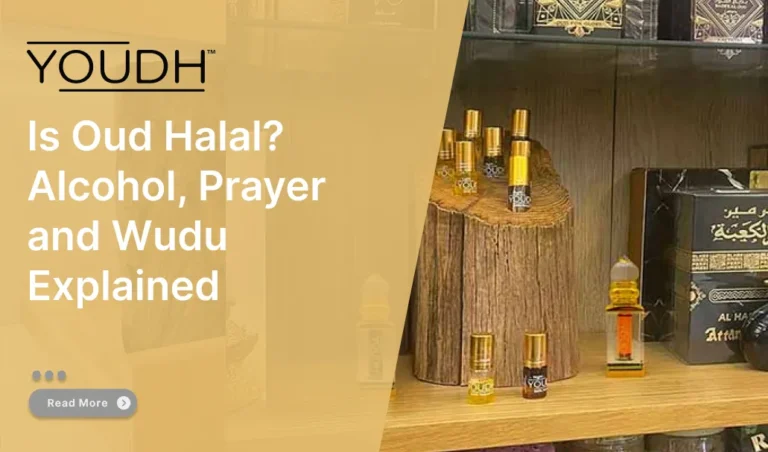

Oud itself is halal. The wood, the resin and the oil distilled from it carry no ruling against them anywhere in Islamic scholarship. The question that actually gets asked, usually right before Salah, is about the alcohol carrying the scent, not the oud in it.
That question matters enough that it shapes how a lot of Muslim buyers shop for fragrance in the first place. This guide walks through why alcohol in perfume is disputed, what wudu and prayer actually require, where scholars agree and disagree, and what to check on a label if you would rather sidestep the question entirely.
The Quran and hadith are clear that khamr, meaning wine and other intoxicating drink, is forbidden. What they do not address directly is the industrial ethanol used as a solvent in modern perfume, which is rarely made from grapes, dates or the other sources classical khamr comes from.
That gap is where the disagreement sits. Some scholars treat all alcohol as one category regardless of source and recommend caution around it. Others hold that the ruling against khamr is about drinking an intoxicant, not about the chemical compound itself, so alcohol that is not derived from khamr and is not being consumed falls outside the prohibition. Both readings come from serious scholarship, not casual opinion, which is why the question keeps coming back up.
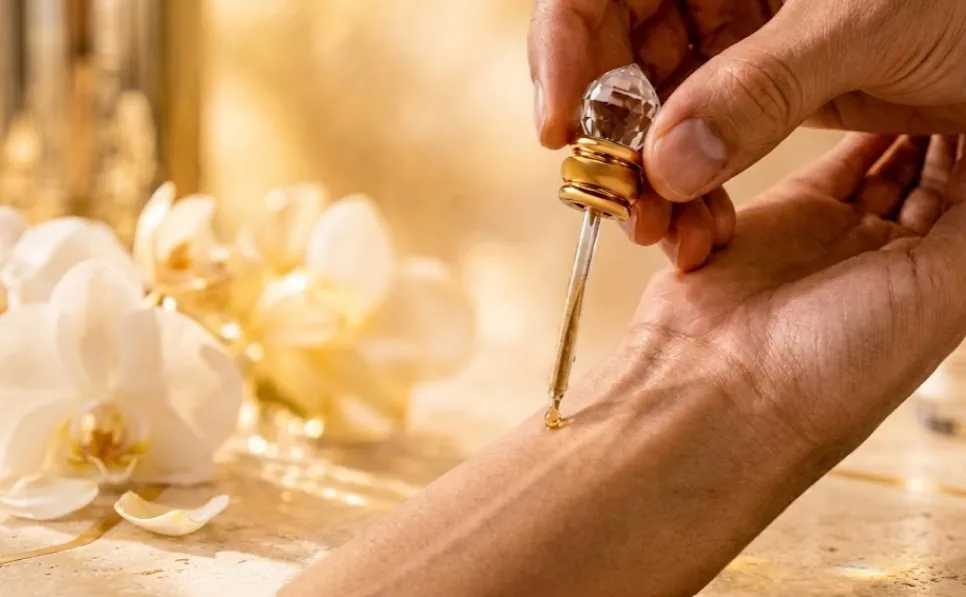
YOUDH’s oud is blended in a natural oil base rather than the alcohol-based format most Western perfume uses. There is no ethanol, denatured or otherwise, in the formula, which means the alcohol question does not need to be worked through at all. You can see the full range on the alcohol-free perfume collection page, including how the oil-based format changes the way the scent wears compared with a spray.
Wudu is invalidated by specific acts such as using the toilet, passing wind or sleeping deeply, not by the scent a person is wearing. Wearing perfume, alcohol-based or not, does not break wudu under any mainstream school of thought.
A separate question is whether the body or clothing needs to be free of an impure substance during prayer itself. For anyone who holds that non-khamr alcohol is impure, that view would extend to wanting it off the skin before Salah as a matter of caution, not because it undoes the wudu already performed. For anyone who holds that this type of alcohol is pure, there is nothing to remove before praying. Either way, an alcohol-free oud like YOUDH removes the question rather than requiring a position on it.
This section sets out both positions as they are actually argued. It does not tell you which one to follow, and if you want a ruling for your own practice, that is a conversation for your own imam or scholar, not a fragrance brand.
The more permissive position, held by a number of contemporary fatwa bodies, is that alcohol not derived from grapes, dates or barley is not inherently impure, and that its use in perfume is a matter of external application rather than consumption. Under this view, alcohol-based perfume is permissible and prayer performed while wearing it is valid.
The more cautious position, held by some scholars within the Hanafi school among others, treats alcohol as suspect regardless of source and recommends avoiding alcohol-based fragrance, particularly around prayer, out of caution rather than a definitive prohibition. One detailed treatment of this exact question, including how the caution differs from an outright ruling, is set out by Darul Iftaa’s Hanafi fiqh guidance on alcohol-based perfumes, which is a useful starting point if you want to read a fuller scholarly argument rather than a summary.

Oud itself is halal. The wood, the resin and the oil distilled from it carry no ruling against them anywhere in Islamic scholarship. The question that actually gets asked, usually right before Salah,…
Rose oud perfume is the pairing of two of perfumery’s most powerful natural materials: the deep, resinous warmth of oud and the fresh, layered sweetness of rose. It is one of the oldest and…
You spray a designer oud, catch a rich opening, and by lunchtime it has all but vanished. That fade is not bad luck. It is chemistry. Most oud you buy on the high street is an oud perfume: a small…
What Is Attar? The Complete Guide to Traditional Perfume Oil Attar is one of the oldest continuously used perfume traditions in the world. For over a thousand years, attar has been the foundation of…
Walk into any traditional perfume shop in the Gulf and you will find rows of small bottles labelled mukhallat. The word covers a category of fragrance that has shaped Arab perfumery for centuries,…
You light your first oud incense cone, expect a deep warm scent to fill the room, and instead get a sharp synthetic smoke that fades in ten minutes. The problem is not your technique. Most so-called…
Oud wood is the rarest fragrant wood in the world. A single kilogram can cost more than gold. Agarwood has been burned in homes across the Middle East, India, and Southeast Asia for over a thousand…
Can females wear oud? The short answer is yes, absolutely, and they have been doing so for over a thousand years. Can females wear oud the same way men do? Yes, with the same application techniques…
The best oud perfume for women has nothing to do with whether oud is masculine or feminine. Oud has been worn by women across the Middle East, South Asia, and North Africa for over a thousand years,…